Black 3dr - Underside toys




Thread Starter
PassionFord Post Whore!!
iTrader: (23)
Joined: Dec 2004
Posts: 9,665
Likes: 16
From: The North

Power figures at the wheels, i believe the flywheel figures are 470/470 - but it powers up early enough for a big turbo, the torque is good and previously felt good on the road so with the few changes i'm happy.

Since i bought it in 2008 Chop 
Last edited by BRAMMER; May 24, 2013 at 02:08 PM.


Thread Starter
PassionFord Post Whore!!
iTrader: (23)
Joined: Dec 2004
Posts: 9,665
Likes: 16
From: The North
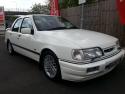
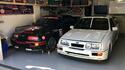
The car drive really well on the road it was back down to Stu as the actuator was a little weak and had a couple of area's to iron out once the RR was installed but prior to the recent visit the car pulls hard in all gears but more importantly still feels like a normal car when driving at low speeds so i feel i have a decent package.
This was the graph i was comparing it too as the engine & turbo spec was very close to mine but on Autronic and 1000cc injectors









Thread Starter
PassionFord Post Whore!!
iTrader: (23)
Joined: Dec 2004
Posts: 9,665
Likes: 16
From: The North



That's about 473bhp fly and 500lb/ft at the flywheel then going off DD graphs I have.
Mine made 472.2 fly which was 403.2 @ the wheels on my old spec TT T38, torque was 456 or 389 @ wheels.
What boost is that at Chris ?
Steve
Mine made 472.2 fly which was 403.2 @ the wheels on my old spec TT T38, torque was 456 or 389 @ wheels.
What boost is that at Chris ?
Steve

Thread Starter
PassionFord Post Whore!!
iTrader: (23)
Joined: Dec 2004
Posts: 9,665
Likes: 16
From: The North
Right collected the car from Blackpool and it's quick on the road, the figures are different to what I posted above it is over 500Ib torque and on the road is mega responsive, the car now peaks 38psi and holds 36 to 8200rpm but picks up really quick and appears to have little lag for the turbo size.

Awesome boost figures and outstanding torque,you've gotta be happy with that.
My m8s 500 is up there at the moment,you may have seen it when you picked your car up?
Thanks.Lee.
My m8s 500 is up there at the moment,you may have seen it when you picked your car up?
Thanks.Lee.
Right collected the car from Blackpool and it's quick on the road, the figures are different to what I posted above it is over 500Ib torque and on the road is mega responsive, the car now peaks 38psi and holds 36 to 8200rpm but picks up really quick and appears to have little lag for the turbo size.

I am the dyno queen


Steve
Thread Starter
PassionFord Post Whore!!
iTrader: (23)
Joined: Dec 2004
Posts: 9,665
Likes: 16
From: The North
I did see the 500 down there, well the one on standard wheels but i think they've had a few recently
Steve you know your the dyno queen

Thread Starter
PassionFord Post Whore!!
iTrader: (23)
Joined: Dec 2004
Posts: 9,665
Likes: 16
From: The North
Something like that Steve, it's all dependant to what transmission percentage loss you go off, some say 15 others 18 I thought it was around 17 which makes it 473/515 but what ever

PassionFords Creator
iTrader: (12)
Joined: May 2003
Posts: 28,824
Likes: 95
From: Blackpool, UK Destination: Rev limiter
WhyDo We Never Quote Flywheel Power?
The most common question we get asked is: “What’s the power at the flywheel?” And the only answer an honest chassis dyno operator can give you is: “We don’t know”
There, we have said it.
But Other Places Tell Us!
Indeed they do –however, they are mere guesstimates and the problem is, some guess high to inflate your ego, some guess a little low and some aren’t too bad at all. But NONE of them are accurate because a chassis dyno can ONLY measure the power atthe tyres... nowhere else. If you want to measure the flywheel power accurately, you need to take the engine out and measure its power on an engine dyno – it’s as simple as that.
Why Is that?
The way a chassis dyno works is that it measures the tractive effort at the wheels against a known resistance and then when plotted against RPM and a set of correction factors (See other signs), it outputs a pretty damn accurate torque and power graph. However, this graph does of course only tell us the power at the point of measurement... the tyres.
What then happens is an extra “percentage” is normally added to the graph to represent the amount of power the dyno maker assumes a transmission system will absorb. Now I have seen these as low as 10%, but as high as 35%.This means a known good 200bhp at the wheels vehicle will have an estimated flywheel power of anywhere between 220bhp and 270bhp if it has a go on each of these dynos. It certainly won’t accelerate any faster as it still has exactly 200bhp at the wheels, but the owner would probably smile a lot more and greatly impress his mates at the pub if he uses the one that gives him 270bhp and sends his mate and his identical car to the one that will tell him he has only 220!
Why Is The Power At The Wheels The Most Important Power?
The power at the wheels themselves is what propels your vehicle forward. When tuning on our dyno, we take a baseline wheel figure over three runs and then tune for more power at the wheels. As long as we get more power at the wheels we know for a fact the car will accelerate better. It’s as simple as that. All we need is repeatability so we can be certain that changes we have made have had the desired effect.
Is There A Ballpark Accurate Figure To Get A Flywheel Estimate?
No – There really isn’t– however, we tend to find that a reasonably good set of figures to use is asfollows:
· Front Wheel Drive = Add 15%
· Rear Wheel Drive = Add 18%
· Four Wheel Drive = Add 22%
Please understand that these figures are just guidelines– To suggest that a 1000bhp at the wheels 4wd vehicle has just lost 220bhpthrough the transmission is ludicrous – that is enough heat to melt a gearbox casing in seconds! The figures do however normally work out pretty accurate for most types of sub 250 bhp road car.
Last edited by Stu @ M Developments; Jun 11, 2013 at 02:56 PM.

This seems a discussion that would probably benefit from the info in a leaflet I have in my reception area that I created to explain why we only quote power at the wheels...
WhyDo We Never Quote Flywheel Power?
The most common question we get asked is: “What’s the power at the flywheel?” And the only answer an honest chassis dyno operator can give you is: “We don’t know”
There, we have said it.
But Other Places Tell Us!
Indeed they do –however, they are mere guesstimates and the problem is, some guess high to inflate your ego, some guess a little low and some aren’t too bad at all. But NONE of them are accurate because a chassis dyno can ONLY measure the power atthe tyres... nowhere else. If you want to measure the flywheel power accurately, you need to take the engine out and measure its power on an engine dyno – it’s as simple as that.
Why Is that?
The way a chassis dyno works is that it measures the tractive effort at the wheels against a known resistance and then when plotted against RPM and a set of correction factors (See other signs), it outputs a pretty damn accurate torque and power graph. However, this graph does of course only tell us the power at the point of measurement... the tyres.
What then happens is an extra “percentage” is normally added to the graph to represent the amount of power the dyno maker assumes a transmission system will absorb. Now I have seen these as low as 10%, but as high as 35%.This means a known good 200bhp at the wheels vehicle will have an estimated flywheel power of anywhere between 220bhp and 270bhp if it has a go on each of these dynos. It certainly won’t accelerate any faster as it still has exactly 200bhp at the wheels, but the owner would probably smile a lot more and greatly impress his mates at the pub if he uses the one that gives him 270bhp and sends his mate and his identical car to the one that will tell him he has only 220!
Why Is The Power At The Wheels The Most Important Power?
The power at the wheels themselves is what propels your vehicle forward. When tuning on our dyno, we take a baseline wheel figure over three runs and then tune for more power at the wheels. As long as we get more power at the wheels we know for a fact the car will accelerate better. It’s as simple as that. All we need is repeatability so we can be certain that changes we have made have had the desired effect.
Is There A Ballpark Accurate Figure To Get A Flywheel Estimate?
No – There really isn’t– however, we tend to find that a reasonably good set of figures to use is asfollows:
· Front Wheel Drive = Add 15%
· Rear Wheel Drive = Add 18%
· Four Wheel Drive = Add 22%
Please understand that these figures are just guidelines– To suggest that a 1000bhp at the wheels 4wd vehicle has just lost 220bhpthrough the transmission is ludicrous – that is enough heat to melt a gearbox casing in seconds! The figures do however normally work out pretty accurate for most types of sub 250 bhp road car.
WhyDo We Never Quote Flywheel Power?
The most common question we get asked is: “What’s the power at the flywheel?” And the only answer an honest chassis dyno operator can give you is: “We don’t know”
There, we have said it.
But Other Places Tell Us!
Indeed they do –however, they are mere guesstimates and the problem is, some guess high to inflate your ego, some guess a little low and some aren’t too bad at all. But NONE of them are accurate because a chassis dyno can ONLY measure the power atthe tyres... nowhere else. If you want to measure the flywheel power accurately, you need to take the engine out and measure its power on an engine dyno – it’s as simple as that.
Why Is that?
The way a chassis dyno works is that it measures the tractive effort at the wheels against a known resistance and then when plotted against RPM and a set of correction factors (See other signs), it outputs a pretty damn accurate torque and power graph. However, this graph does of course only tell us the power at the point of measurement... the tyres.
What then happens is an extra “percentage” is normally added to the graph to represent the amount of power the dyno maker assumes a transmission system will absorb. Now I have seen these as low as 10%, but as high as 35%.This means a known good 200bhp at the wheels vehicle will have an estimated flywheel power of anywhere between 220bhp and 270bhp if it has a go on each of these dynos. It certainly won’t accelerate any faster as it still has exactly 200bhp at the wheels, but the owner would probably smile a lot more and greatly impress his mates at the pub if he uses the one that gives him 270bhp and sends his mate and his identical car to the one that will tell him he has only 220!
Why Is The Power At The Wheels The Most Important Power?
The power at the wheels themselves is what propels your vehicle forward. When tuning on our dyno, we take a baseline wheel figure over three runs and then tune for more power at the wheels. As long as we get more power at the wheels we know for a fact the car will accelerate better. It’s as simple as that. All we need is repeatability so we can be certain that changes we have made have had the desired effect.
Is There A Ballpark Accurate Figure To Get A Flywheel Estimate?
No – There really isn’t– however, we tend to find that a reasonably good set of figures to use is asfollows:
· Front Wheel Drive = Add 15%
· Rear Wheel Drive = Add 18%
· Four Wheel Drive = Add 22%
Please understand that these figures are just guidelines– To suggest that a 1000bhp at the wheels 4wd vehicle has just lost 220bhpthrough the transmission is ludicrous – that is enough heat to melt a gearbox casing in seconds! The figures do however normally work out pretty accurate for most types of sub 250 bhp road car.
Thread Starter
PassionFord Post Whore!!
iTrader: (23)
Joined: Dec 2004
Posts: 9,665
Likes: 16
From: The North
Now i have the car it was time to fit the Supra diff in again - this diff has been in out in and out again - after a bastard to get in the first drive up the road resulted in a progressively loud metallic sound coming from the rear end, not massively loud but enough to feel something appeared dry. The second run and a bit of go pedal ended with the centre bearing rubber being ripped up by the prop so limped back to the shop to sort.
With the car on the ramp turning the wheels showed trickles of fluid coming out of the output flange on the drivers side and from somewhere on the passenger side - not a lot but enough to warrant the diff out and will shortly be away for Bara to fit one of their stage 1 kits

For anyone interested
This is the break down at Bara:
1 x Service & Rebuild Axle Inc Setting Back Lash £200
1 x Reset LSD to 100 Pounds Feet Inc Shimming Gears £50
2 x Side Seals £15 each
1 x Pinion Seal £15.50
1 x Solid Spacer £45
1 x Max Grip 1-£55
2 x Flange Studs £2.50 Each
Total £400.50
If you need a bearing kit = £240
To the wheels, the MO6 are off and sold so back to the CXN - the camber shims have been removed making a little more room for the wheel to sit in the arches - but i need the springs sorting on the coil overs as theirs no happy medium with the rear so we'll see what GAZ say.
With the car on the ramp turning the wheels showed trickles of fluid coming out of the output flange on the drivers side and from somewhere on the passenger side - not a lot but enough to warrant the diff out and will shortly be away for Bara to fit one of their stage 1 kits
For anyone interested
This is the break down at Bara:
1 x Service & Rebuild Axle Inc Setting Back Lash £200
1 x Reset LSD to 100 Pounds Feet Inc Shimming Gears £50
2 x Side Seals £15 each
1 x Pinion Seal £15.50
1 x Solid Spacer £45
1 x Max Grip 1-£55
2 x Flange Studs £2.50 Each
Total £400.50
If you need a bearing kit = £240
To the wheels, the MO6 are off and sold so back to the CXN - the camber shims have been removed making a little more room for the wheel to sit in the arches - but i need the springs sorting on the coil overs as theirs no happy medium with the rear so we'll see what GAZ say.
Last edited by BRAMMER; Jun 20, 2013 at 02:27 PM.
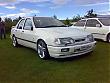

 pain in the bum!
Thread Starter
PassionFord Post Whore!!
iTrader: (23)
Joined: Dec 2004
Posts: 9,665
Likes: 16
From: The North
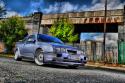
Well i'm cutting it short again and the car is having the lip on the rear spoiler painted again as it's too matte and the rear arches need some more attention as these wheels don't want to play ball and have rubbed on them so more trimming and reattaching on the passenger side and the rear tub needs smacking in more as since the car was set higher the coil spring is touching so a few jobs to do then a full clean on Saturday ready for Sunday.