


Technical discussion on "running in".


Thread Starter
PassionFord Post Troll
Joined: Jul 2004
Posts: 3,446
Likes: 1
From: Nr Ipswich
 Technical discussion on "running in".
Following on from Chips very good engine building discussion, here is the start of the “running in” technical discussion. Thankyou for volunteering me chip. I’ve done my best. I hope it makes sense.
With a modern engine the running in process is all about piston ring sealing. Not running in bearings or bottom ends. In theory big end and main bearings should always be running on high-pressure oil (apart from maybe start-up) not surfaces running together so shouldn’t need running in.
It is however critical for engine performance that the piston rings are bedded to the cylinder walls.
A common mis-conception is that the sprung rings push themselves out onto the bore to create a seal. This is wrong. Combustion pressures would easily overcome the springyness (word?) of the rings!
The only ring that uses its own pressure is the oil control ring that exerts light pressure on the cylinder
walls to scrape excess oil away.
It is the cylinder pressure that gets behind the ring and pushes it out onto the cylinder wall to create a seal.
When you run a fresh engine the bores have a slightly abrasive hone pattern that is used to help the rings bed in.
If you drive around for 1000 miles at 1500 rpm with no load you will use all the roughness of the hone with out the rings really being able to use it to bed in.
What you need is some decent cylinder pressures in the first few miles to push the piston rings out onto the freshly honed bore and enable them to run in together. This means putting the engine under load.
Basically if the rings are not forced against the walls soon enough, they will use up all the roughness before they seat. This can is sometimes referred to as glazing the bores.
This is why if you are replacing the rings on a used engine you should always get the cylinders re honed. Some people refer to it as breaking the glaze.
Years ago at a bike mag I used to read (Performance Bikes) the late great John Robinson did a test with two early SRAD GSXR750s. He thrashed one from the crate and ran one in for 1000 miles as with no load. They then put them on the dyno. The thrashed bike made 124bhp, several more than the run in one!
They then compression checked, stripped them down, examined and concluded that the extra power must have come from the better cylinder sealing.
Another mis-conception is that an engine has to go through a certain amount of heat cycles before it is run in. I think people believe that parts get heat treated as they are run??? Heat treating of engine parts is done at a temperature far in excess of that which will be reached by a running engine. Well at least one that has oil in it and is not welding itself together!
What are the advantages of better sealing rings I hear you ask.
1. No wasted cylinder pressure
2. Which equals more power
3. Less blow by of rings
4. Which equals less contamination of oil with combustion gases
5. Which equals better performing oil and an engine that lasts longer.
So we have established that what you need to do to run your rings in is put the engine under load and create greater cylinder pressures.
Ok, bearing that in mind, this is how I run my engines in, whether it be a CR125 or a 2ltr zetec.
Insert “at your own risk blah blah blah” clause of your choice!
1) Warm engine up (v.important)
2) Do a couple or three mile lap of my local lanes at 1/3 throttle with plenty of accel / decel
3) Another lap of lanes with ½ throttle, plenty of accel / decel
4) As above ¾ throttle
5) A couple of full throttle blasts.
6) Change oil and filter
7) Enjoy!
I always pull in and quickly check for leaks etc. in between laps.
Always keep an eye on the temp gauge and oil pressure if you can.
Change your oil and filter as frequently as you can afford. You can’t hurt an engine by changing the oil too much!
This how I run in my engines. If you are having an engine built by a tuner, follow their directions for run in or you may invalidate any warranty / guarantees they may give.
I’m sure there will be plenty of discussion on this topic, however it would be nice as a follow up to have some info / input from the oilman as to the technical reasons you should use different oils during break in
With a modern engine the running in process is all about piston ring sealing. Not running in bearings or bottom ends. In theory big end and main bearings should always be running on high-pressure oil (apart from maybe start-up) not surfaces running together so shouldn’t need running in.
It is however critical for engine performance that the piston rings are bedded to the cylinder walls.
A common mis-conception is that the sprung rings push themselves out onto the bore to create a seal. This is wrong. Combustion pressures would easily overcome the springyness (word?) of the rings!
The only ring that uses its own pressure is the oil control ring that exerts light pressure on the cylinder
walls to scrape excess oil away.
It is the cylinder pressure that gets behind the ring and pushes it out onto the cylinder wall to create a seal.
When you run a fresh engine the bores have a slightly abrasive hone pattern that is used to help the rings bed in.
If you drive around for 1000 miles at 1500 rpm with no load you will use all the roughness of the hone with out the rings really being able to use it to bed in.
What you need is some decent cylinder pressures in the first few miles to push the piston rings out onto the freshly honed bore and enable them to run in together. This means putting the engine under load.
Basically if the rings are not forced against the walls soon enough, they will use up all the roughness before they seat. This can is sometimes referred to as glazing the bores.
This is why if you are replacing the rings on a used engine you should always get the cylinders re honed. Some people refer to it as breaking the glaze.
Years ago at a bike mag I used to read (Performance Bikes) the late great John Robinson did a test with two early SRAD GSXR750s. He thrashed one from the crate and ran one in for 1000 miles as with no load. They then put them on the dyno. The thrashed bike made 124bhp, several more than the run in one!
They then compression checked, stripped them down, examined and concluded that the extra power must have come from the better cylinder sealing.
Another mis-conception is that an engine has to go through a certain amount of heat cycles before it is run in. I think people believe that parts get heat treated as they are run??? Heat treating of engine parts is done at a temperature far in excess of that which will be reached by a running engine. Well at least one that has oil in it and is not welding itself together!
What are the advantages of better sealing rings I hear you ask.
1. No wasted cylinder pressure
2. Which equals more power
3. Less blow by of rings
4. Which equals less contamination of oil with combustion gases
5. Which equals better performing oil and an engine that lasts longer.
So we have established that what you need to do to run your rings in is put the engine under load and create greater cylinder pressures.
Ok, bearing that in mind, this is how I run my engines in, whether it be a CR125 or a 2ltr zetec.
Insert “at your own risk blah blah blah” clause of your choice!
1) Warm engine up (v.important)
2) Do a couple or three mile lap of my local lanes at 1/3 throttle with plenty of accel / decel
3) Another lap of lanes with ½ throttle, plenty of accel / decel
4) As above ¾ throttle
5) A couple of full throttle blasts.
6) Change oil and filter
7) Enjoy!
I always pull in and quickly check for leaks etc. in between laps.
Always keep an eye on the temp gauge and oil pressure if you can.
Change your oil and filter as frequently as you can afford. You can’t hurt an engine by changing the oil too much!
This how I run in my engines. If you are having an engine built by a tuner, follow their directions for run in or you may invalidate any warranty / guarantees they may give.
I’m sure there will be plenty of discussion on this topic, however it would be nice as a follow up to have some info / input from the oilman as to the technical reasons you should use different oils during break in

Football Cwazy
Joined: Oct 2004
Posts: 9,553
Likes: 0
From: Redditch, Worcestershire
Re: Technical discussion on "running in".
Originally Posted by Garage19
3. Less blow by of rings
4. Which equals less contamination of oil with combustion gases
4. Which equals less contamination of oil with combustion gases
excellent read
 although does an engine need longer than the few miles you sdescribed to run in, or will the rings and bore bed in after those few miles??

PassionFord Post Whore!!
Joined: Apr 2004
Posts: 5,343
Likes: 0
From: Warsaw, Poland
As engine/car is not only pistons and cranskshaft bearings I would give it couple hundred km's at the begining for things ike camshafts to bed in. At least on new car or compeltly new engine. OR am I wrong?

Banned
Joined: Dec 2002
Posts: 142
Likes: 1
This one should end up with a fair bit of discussion!
Im of the belief that you cant run rings in the way you described, due to the fact that if you do it like that its my belief you will see excessive piston ring blow by and this will stop them becoming air tight in the first place, so i always give them longer at small throttle openings and at lower rpm.
But the basic principle of increasing the load i do stick to, just over a logner period of time.
Its an interesting point you make though about "using up" the abrasive marks on the bores before the rings have really bedded in if you are too gentle.
I think of all the technical disucssions on here currently this one could be the one with the most actual discussion in it as its such a black art and everyone has their own preferred method of running in!
Im of the belief that you cant run rings in the way you described, due to the fact that if you do it like that its my belief you will see excessive piston ring blow by and this will stop them becoming air tight in the first place, so i always give them longer at small throttle openings and at lower rpm.
But the basic principle of increasing the load i do stick to, just over a logner period of time.
Its an interesting point you make though about "using up" the abrasive marks on the bores before the rings have really bedded in if you are too gentle.
I think of all the technical disucssions on here currently this one could be the one with the most actual discussion in it as its such a black art and everyone has their own preferred method of running in!
Banned
Joined: Dec 2002
Posts: 142
Likes: 1
Originally Posted by Azrael
As engine/car is not only pistons and cranskshaft bearings I would give it couple hundred km's at the begining for things ike camshafts to bed in. At least on new car or compeltly new engine. OR am I wrong?
I dont run bearings in AT ALL, im quite happy to fit new bearings, turn the key, warm the engine up, and thrash it round a track.
One thing worth mentioning on running is that its vital you DO NOT use a fully synthetic oil, they work too well and stop the rings bedding in!
Thread Starter
PassionFord Post Troll
Joined: Jul 2004
Posts: 3,446
Likes: 1
From: Nr Ipswich
Originally Posted by Azrael
As engine/car is not only pistons and cranskshaft bearings I would give it couple hundred km's at the begining for things ike camshafts to bed in. At least on new car or compeltly new engine. OR am I wrong?
Thread Starter
PassionFord Post Troll
Joined: Jul 2004
Posts: 3,446
Likes: 1
From: Nr Ipswich
Originally Posted by chip-3door
This one should end up with a fair bit of discussion!
Im of the belief that you cant run rings in the way you described, due to the fact that if you do it like that its my belief you will see excessive piston ring blow by and this will stop them becoming air tight in the first place, so i always give them longer at small throttle openings and at lower rpm.
But the basic principle of increasing the load i do stick to, just over a logner period of time.
Its an interesting point you make though about "using up" the abrasive marks on the bores before the rings have really bedded in if you are too gentle.
I think of all the technical disucssions on here currently this one could be the one with the most actual discussion in it as its such a black art and everyone has their own preferred method of running in!
Im of the belief that you cant run rings in the way you described, due to the fact that if you do it like that its my belief you will see excessive piston ring blow by and this will stop them becoming air tight in the first place, so i always give them longer at small throttle openings and at lower rpm.
But the basic principle of increasing the load i do stick to, just over a logner period of time.
Its an interesting point you make though about "using up" the abrasive marks on the bores before the rings have really bedded in if you are too gentle.
I think of all the technical disucssions on here currently this one could be the one with the most actual discussion in it as its such a black art and everyone has their own preferred method of running in!
Trending Topics

PassionFord Post Whore!!
Joined: May 2003
Posts: 6,467
Likes: 0
From: ESSEX
i agree. when i used to race two stroke karts few years ago we used to run them in as follows
10 min @ 10k
10 min @ 12k
10 min @ 14k
10 min @ 16k
10 min of full throttle anyting up to 18k depending what gearing you ran
i once ran in a stage 2 cvh so gently for 1000miles at 2.5k in my old fiesta and it used so much oil all the time
carl
10 min @ 10k
10 min @ 12k
10 min @ 14k
10 min @ 16k
10 min of full throttle anyting up to 18k depending what gearing you ran
i once ran in a stage 2 cvh so gently for 1000miles at 2.5k in my old fiesta and it used so much oil all the time
carl

Testing the future
Joined: Jul 2003
Posts: 17,597
Likes: 24
From: W. Sussex
i have read various articles that compare the 2 methods of running in and to test only one engine using each of the methods is hardly conclusive 
however, most of the articles come to the same conclusion, so that does tend to hint that one way is better than the other - the hard throttle version as described similarly by Garage 19 and Chip.
one thing i don't really understand though, is how combustion pressure can act on only the inside of the ring to push it against the cylinder wall. surely pressure acts over the top and both inside and outside of the ring?
however, most of the articles come to the same conclusion, so that does tend to hint that one way is better than the other - the hard throttle version as described similarly by Garage 19 and Chip.
one thing i don't really understand though, is how combustion pressure can act on only the inside of the ring to push it against the cylinder wall.
surely pressure acts over the top and both inside and outside of the ring?

Just to add to the toipic, I have found in the past that high engine speeds polish the bores and build up a glaze thus not bedding in the rings.
The way I ran my engine in is this..
Drove round up at varying rates of throttle and loads, keeping below 3000 rpm) for 100 miles and dropped the oil/filter. Replaced with fresh stuff.
Drove round for 400 miles at varying rates of throttle and engine loads still keeping below 3k until about 300 miles had been covered. Drop the oil/filter and fill with fresh.
Drove round for 500 miles allowing the turbo to come on boost occasionally and slowly reving it higher and higher as the miles clocked up. At 1k miles, drop the oil/filter anf put the good stuff in. Caned it for another 1000 miles before upping the power.
I live not far away from the pennines so have some ideal hills to load the car up with.
The way I ran my engine in is this..
Drove round up at varying rates of throttle and loads, keeping below 3000 rpm) for 100 miles and dropped the oil/filter. Replaced with fresh stuff.
Drove round for 400 miles at varying rates of throttle and engine loads still keeping below 3k until about 300 miles had been covered. Drop the oil/filter and fill with fresh.
Drove round for 500 miles allowing the turbo to come on boost occasionally and slowly reving it higher and higher as the miles clocked up. At 1k miles, drop the oil/filter anf put the good stuff in. Caned it for another 1000 miles before upping the power.
I live not far away from the pennines so have some ideal hills to load the car up with.

I always run my engines in fairly hard as like Garage 19 says they dont bed in otherwise....
Obviously you must have some mechanical sympathy and not treat them too brutally....
My friend and i both bought new Honda Fireblades in 1995,I ran mine in fairly hard and he listened to the salesman and ran his in at 3k for 1000 miles,with fairly shit results for him.....
My bike never missed a beat,started first spin,was quicker and more responsive,never used a drop of oil and generally did everything it said on the tin.....
His bike was a poor starter,used oil,and generally was a bag of shit....After numerous trips to the workshop he got pissed off and px`d it for a new one which he thrashed the tits off from day one...that one was mega....
Obviously you must have some mechanical sympathy and not treat them too brutally....
My friend and i both bought new Honda Fireblades in 1995,I ran mine in fairly hard and he listened to the salesman and ran his in at 3k for 1000 miles,with fairly shit results for him.....
My bike never missed a beat,started first spin,was quicker and more responsive,never used a drop of oil and generally did everything it said on the tin.....
His bike was a poor starter,used oil,and generally was a bag of shit....After numerous trips to the workshop he got pissed off and px`d it for a new one which he thrashed the tits off from day one...that one was mega....
PassionFord Post Whore!!
Joined: Apr 2004
Posts: 5,343
Likes: 0
From: Warsaw, Poland
May I add one question to the discussion - what about running in whole new car? Is there anything else apart from the engine we need to take into account? My mate is picking up a new Scoobie STI in couple of weeks.
PassionFord Post Whore!!
Joined: Jul 2004
Posts: 7,428
Likes: 4
From: Wiltshire, Bath, chippenham area!
semi synthetic oil for runing in then
what do you think? as they say ONLY use fully synthetic
for cosworth/turbo cars?
But i guess that is more to do with temperature range
and as you aint giving it large you wont need to worry about
hi temps etc too much?? ????????????
cheers!
what do you think? as they say ONLY use fully synthetic
for cosworth/turbo cars?
But i guess that is more to do with temperature range
and as you aint giving it large you wont need to worry about
hi temps etc too much?? ????????????
cheers!
PassionFord Post Whore!!
Joined: Apr 2004
Posts: 5,343
Likes: 0
From: Warsaw, Poland
Originally Posted by pee vee
semi synthetic oil for runing in then
what do you think? as they say ONLY use fully synthetic
for cosworth/turbo cars?
But i guess that is more to do with temperature range
and as you aint giving it large you wont need to worry about
hi temps etc too much?? ????????????
what do you think? as they say ONLY use fully synthetic
for cosworth/turbo cars?
But i guess that is more to do with temperature range
and as you aint giving it large you wont need to worry about
hi temps etc too much?? ????????????
I always had reservations about runing turbocharger on non-synthetic oil at any time.
Originally Posted by chip-3door
"thrash the tits off" doesnt sound like good advice to me.
I would NEVER use high rpm when running in an engine.
I would NEVER use high rpm when running in an engine.
Figment of speech mate.....

It`s a Scouser thing........You wouldnt understand...

Too many posts.. I need a life!!
Joined: Jul 2004
Posts: 868
Likes: 0
From: norway
tried this on a r6 a couple of years ago.went like stink.run all our bikes in like that in a rolling road dyno
never had a problem with them
http://www.mototuneusa.com/break_in_secrets.htm
cheers
never had a problem with them
http://www.mototuneusa.com/break_in_secrets.htm
cheers

PassionFord Post Whore!!
Joined: Oct 2004
Posts: 3,902
Likes: 12
From: south london
i have been told to use cheap shit deisel oil for running in
as its similar to petrol oil but cant take the high revs and temps the petrols make (doesnt matter for running in tho as revs are kept low)
plus it has a cleaning agent in it so wipes away the shit from the engine at the same time
ive done this a few times as have a few others i know and none of us have has problems.
i normally run an engine in as described above but for longer periods with increasing load and boost.
think of it this way tho,
any1 that has bought a brand new car, did u run that in or jump in and abuse it cos its got a warranty so doesnt matter if it breaks? and did you then have any troubles with that engine???
as its similar to petrol oil but cant take the high revs and temps the petrols make (doesnt matter for running in tho as revs are kept low)
plus it has a cleaning agent in it so wipes away the shit from the engine at the same time
ive done this a few times as have a few others i know and none of us have has problems.
i normally run an engine in as described above but for longer periods with increasing load and boost.
think of it this way tho,
any1 that has bought a brand new car, did u run that in or jump in and abuse it cos its got a warranty so doesnt matter if it breaks? and did you then have any troubles with that engine???
PassionFord Post Whore!!
Joined: Apr 2004
Posts: 5,343
Likes: 0
From: Warsaw, Poland
Originally Posted by stu21t
think of it this way tho,
any1 that has bought a brand new car, did u run that in or jump in and abuse it cos its got a warranty so doesnt matter if it breaks? and did you then have any troubles with that engine???
any1 that has bought a brand new car, did u run that in or jump in and abuse it cos its got a warranty so doesnt matter if it breaks? and did you then have any troubles with that engine???
Everyone I now who bough one carefully run it in.
PassionFord Post Whore!!
Joined: Oct 2004
Posts: 3,902
Likes: 12
From: south london
i have had 2 brand new cars and not run them in
i mean brand new complete cars from the dealer not a new modified engine
plus do you think the people who work in the garages drive them carefully for road tests?
i mean brand new complete cars from the dealer not a new modified engine
plus do you think the people who work in the garages drive them carefully for road tests?

i had a mondeo 2.2 tdci hire car, had just 13 miles on the clock when they gave me the keys.
its about 10 miles to the motorway so was varing throttle/load then got on the motorway and wound it up to 140 lol
car went like a c*nt
its about 10 miles to the motorway so was varing throttle/load then got on the motorway and wound it up to 140 lol
car went like a c*nt



10K+ Poster!!
Joined: May 2003
Posts: 13,146
Likes: 0
From: Newbury
Originally Posted by Azrael
Originally Posted by pee vee
semi synthetic oil for runing in then
what do you think? as they say ONLY use fully synthetic
for cosworth/turbo cars?
But i guess that is more to do with temperature range
and as you aint giving it large you wont need to worry about
hi temps etc too much?? ????????????
what do you think? as they say ONLY use fully synthetic
for cosworth/turbo cars?
But i guess that is more to do with temperature range
and as you aint giving it large you wont need to worry about
hi temps etc too much?? ????????????
I always had reservations about runing turbocharger on non-synthetic oil at any time.
you should be on boost running in an engine.... that puts LOADS of pressure on the rings, which although they will get, for the purpose of beeding into the bores is bad bad news.
Alex
10K+ Poster!!
Joined: May 2003
Posts: 13,146
Likes: 0
From: Newbury
Originally Posted by Azrael
May I add one question to the discussion - what about running in whole new car? Is there anything else apart from the engine we need to take into account? My mate is picking up a new Scoobie STI in couple of weeks.
The engine is the main bit.... and new engines are built much much better than 20 year old cossys!!!!
Its moved on a bit since YB production

Alex
PassionFord Post Whore!!
Joined: Apr 2004
Posts: 5,343
Likes: 0
From: Warsaw, Poland
Originally Posted by J871yhk
Originally Posted by Azrael
May I add one question to the discussion - what about running in whole new car? Is there anything else apart from the engine we need to take into account? My mate is picking up a new Scoobie STI in couple of weeks.
The engine is the main bit.... and new engines are built much much better than 20 year old cossys!!!!
Its moved on a bit since YB production
There is officiaal running-in procedure by Subaru Import Poland, which at it's end involves 150+mph (officially on German Autobahn
 )
)

PassionBMW.com Member
Joined: May 2003
Posts: 3,530
Likes: 0
From: UK
Great thread
http://www.mototuneusa.com/break_in_secrets.htm is a great link on this subject.
I'd ONLY use mineral oil for running in (infact, I run mineral all the time anyway).
http://www.mototuneusa.com/break_in_secrets.htm is a great link on this subject.
I'd ONLY use mineral oil for running in (infact, I run mineral all the time anyway
).
Too many posts.. I need a life!!
Joined: Jul 2004
Posts: 868
Likes: 0
From: norway
we where over on daytona 200miles in 2000.then we had a chat with the guy that runs mototune.nice helpfull guy.knows a lot 
btw we finished in 11 place (BEST PRIVATEER AND BEST YAMAHA)
oops cap lock
cheers
btw we finished in 11 place (BEST PRIVATEER AND BEST YAMAHA)
oops cap lock
cheers
Thread Starter
PassionFord Post Troll
Joined: Jul 2004
Posts: 3,446
Likes: 1
From: Nr Ipswich
Originally Posted by J871yhk
Absolutly spot on Garage19
Few will believe you thou!
please can we call you something else thou garage19 is difficult lol
Alex
Few will believe you thou!
please can we call you something else thou
garage19 is difficult lolAlex


PassionFord Post Whore!!
Joined: Aug 2004
Posts: 4,574
Likes: 0
From: Chesterfield
Re: Technical discussion on "running in".
Originally Posted by Garage19
Another mis-conception is that an engine has to go through a certain amount of heat cycles before it is run in. I think people believe that parts get heat treated as they are run??? Heat treating of engine parts is done at a temperature far in excess of that which will be reached by a running engine. Well at least one that has oil in it and is not welding itself together!
I was also surprised to be allowed a max of 5krpm from 100 miles on.
Good Thread
Thread Starter
PassionFord Post Troll
Joined: Jul 2004
Posts: 3,446
Likes: 1
From: Nr Ipswich
Originally Posted by J871yhk
Whats your background Doug?
Your definatly knowledgeable and involved in some great projects (ms on the bmw for exmaple!)
Alex
Your definatly knowledgeable and involved in some great projects (ms on the bmw for exmaple!)
Alex
I'm just a bit of a petrol head. Started with building crunch 90 track bikes as a kid (mine had high comp, re profiled cam, pocketed piston, homemade oil cooler) and gone from there. Picked up a lot of stuff along the way i guess. Try to have a winter project every year.
Heres one from a few years ago! My Blade flew after i put this back in
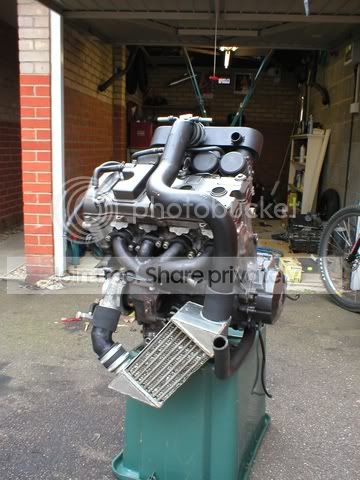
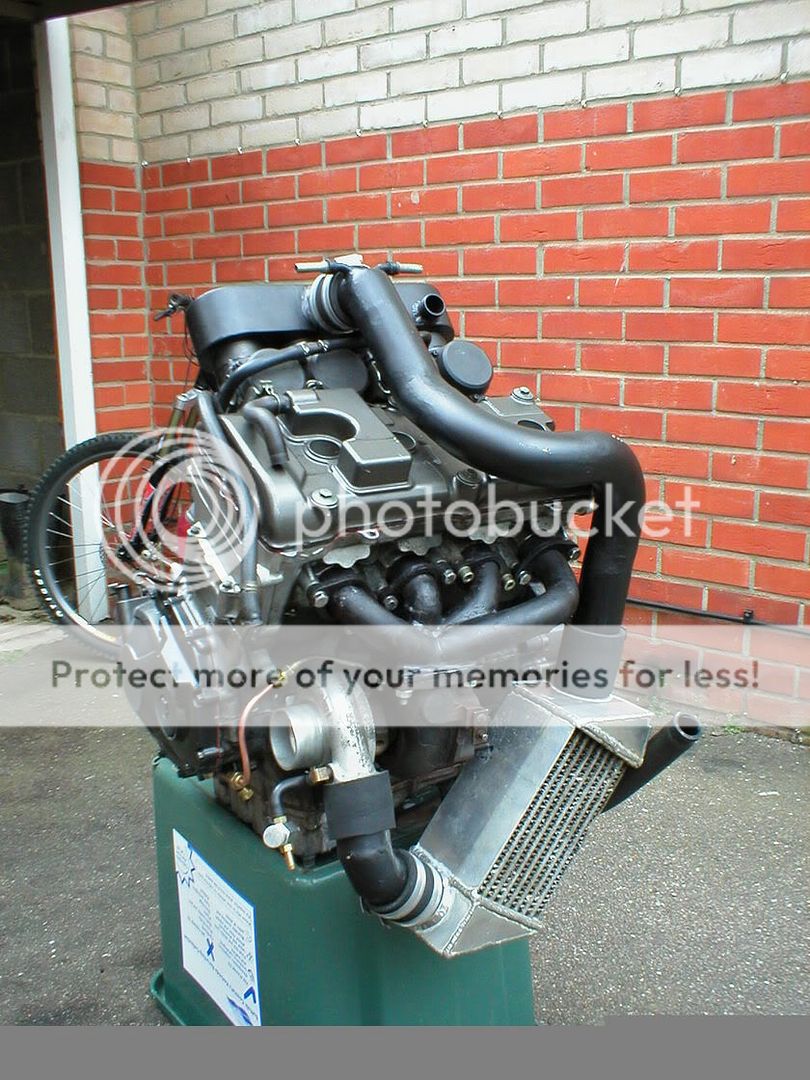
This years project, the kit car, isn't doing to well due to lack of time. Been working on other peoples cars (like the BMW) and busy with my small side business.
www.suffolkflockingservices.co.uk
Just lets me pay for my toys with out the missus moaning really.
Doug.
PassionFord Post Whore!!
Joined: Aug 2004
Posts: 4,574
Likes: 0
From: Chesterfield
Originally Posted by escortrsmatt
Originally Posted by escortrsmatt
what about when an engine is run in on an engine dyno?
What kind of rpm and load values do they use and for what periods of time?
What kind of rpm and load values do they use and for what periods of time?
Thread Starter
PassionFord Post Troll
Joined: Jul 2004
Posts: 3,446
Likes: 1
From: Nr Ipswich
Not really sure on this one as i am not lucky enough to have or have access to an engine dyno for development.
I should imagine enough load to re create aceeleration on the road in say fourth? And the load should not be constant, but raised and reduced?
I should imagine enough load to re create aceeleration on the road in say fourth? And the load should not be constant, but raised and reduced?
