


Modified Lotus Esprit S4


 Modified Lotus Esprit S4
The turbo died on track at Snetterton a few months ago, so with my motto of not replacing stuff with standard items, the modifcations began:
The air flow figures of the standard turbo are the limiting factor if you want to make substantial gains in the performance of these cars. Even after changing the EPROM for more fuel, ignition and boost, you cannot get any more sustained power, due to the shonky charge-cooling arrangement and small size of the turbo. The bottom line is that turning up the boost one one of these, quickly runs up against the fact that the standard turbo cannot flow enough air at the top end, the result is that the inlet temperature raises very dramatically and boost drops away. In fact, just like RS Turbos, there is common condition in which increasing the boost will actually produce less power output due to the inefficiency of the standard set up.
The turbine side can actually only flow about 410 CFM of exhaust gases before the back pressure rises beyond acceptable limits. The engine can only make the stated 264bhp or 280bhp "overshoot" for about 6 seconds before these systems "catch up" with each other. Then, as the intake temp rises, the exhaust back pressure rises and the power falls away.
The Esprit S4 is fitted with a Garrett Air Research T-3 turbo, comprised of standard 270°thrust bearings, 0.63 AR "Lotus only" turbine housing with integral wastegate, standard T-3 compressor housing, and a 42 trim compressor wheel, oil fed and water cooled. It has a maximum flow rating of 25 lbs/min at a 1.2 bar of boost, with 58% efficiency.
The cure? A bigger turbo and better charge-cooler! . I chose to replace this with a super-duper hybrid version from Harvey (of course):

This is similar to the turbo on the S4s, the Garrett T3 turbo was modified by fitting a 60 trim compressor wheel and 360° thrust bearing etc. It has a maximum flow rating of 34 lbs/min at a pressure ratio of 1.3 bar of boost, with 64% efficiency.
Next we move on to the intake system, as there is a lot of air flow lost from the turbo to the throttle body inlets. This was looked at by some racing teams a few years ago, and they found that the standard inlet system lost over 30 cfm of airflow from turbo to the inlet ports . However, with a little matching of the inlet manifold to the ports, gas flowing the nozzle and plenum you could get this down to about 7-8 cfm loss. The race team got the losses from turbo to inlet on the GT1 car down to less than 5 cfm losses! The entry of the nozzle to the plenum is quite restrictive as you can see from the photos. Over 5mm was machined from the entry of the nozzle to the plenum and all the edges were radiused off and matched to the individual gaskets (again by Harvey / Tim at SCS).


All the 4-cylinder turbo-charged Esprit models (SE, S4, S4s & GT3) use an air/water heat exchanger (chargecooler) to reduce the air inlet temperatures and so increase the density of air leaving the turbocharger compressor before it enters the intake plenum chamber. However, just like the RS Turbo type ones, these in standard size, suffer from excessive heat soak, so are only good for short blasts of speed. Water is pumped via alloy pipes routed through the chassis backbone, to a chargecooler radiator mounted ahead of both the air conditioning condenser and the engine cooling radiator.
The chargecooler system on my car has been extensively upgraded with a doouble size chargecooler. The cooling matrix is twice the size of the original with no additional loss in air flow. What results is a much greater cooling efficiency, so now combined with the bigger, more efficient turbo, the power is much improved.
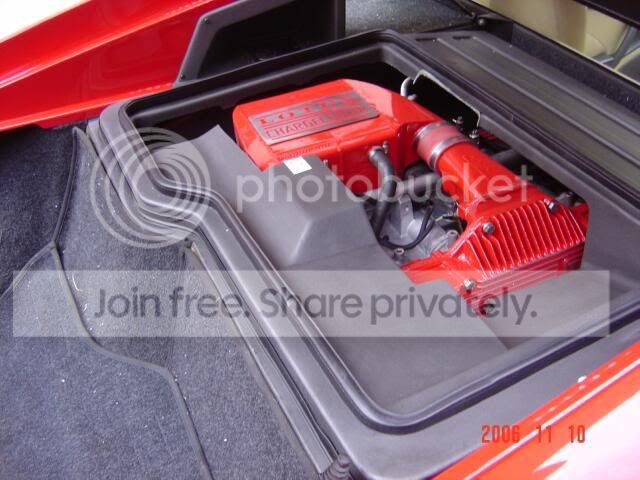
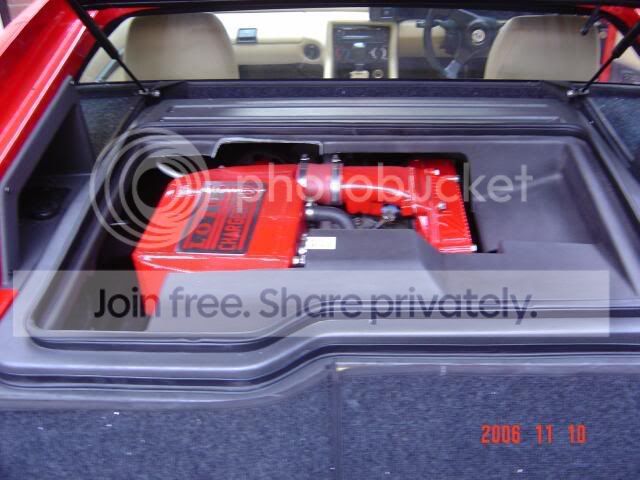


The good condition of the rubber impellor of the charge-cooler pump is essential to achieve the intended performance from the engine. Sadly the standard item deteriorates slowly as you drive, progressively robbing power, but so you don't notice . Ours had siezed solid, meaning that the water was only running round due to thermal cycling (like a Model T Ford water system ). This impellor is custom made using the highest quality and most appropriate rubber compound, so that it doesn't have to be changed all over again 6 months later . Can't believe Lotus didn't do this in the first place
  .
.

Moving on to the fuel system, would you believe that Lotus employs the infamous chavtastic RS Turbo mod of not one supplementary injector, but two.
The standard primary GM-Rochester injectors are well known for not being the best injectors on this planet. Its quite common that the these are way out of spec from the factory. They differed too much in flow and had a horrible spray pattern. This resulted in an uneven running engine, poor idle and last but not least it robbed power and also had the potential to cause serious defects if one or more injectors gave too less fuel. Piston damaged could have been possible !
Step forward Cosworth tuning in the form of four Bosh light blue injectors, matched, flow tested and checked for correct spray pattern. These are the same flow rate as the standard items and just bolt straight in .
.

The pair of secondaries have had to be inreased in flow from the standard 190cc/min to 250c/min. Bizarrely, these are actually high impedance (16 ohm) saturated type injectors. These injectors operate at a fixed frequency of 128 Hz, with the quantity of fuel delivered dependent only the pulse width sent by the ECU.

The standard S4 ECU fuel mapping only triggers the secondary injectors over 4800 rpm and 0.7 bar boost. The increase to 250 cc/min items is required when running above the factory boost, as now the EPROM is changed to allow the turbo to go to a heady 1.3 bar
How shonky is this though, the ECU only goes into "open loop" mode above 94% throttle openings, and only in open loop mode is there no feedback to the ECU from the lambda sensor, ONLY under these conditions fuelling is based on the new pre-stored fuel maps in the ECU. Below 94%, the fuelling / ignition is entirely controlled via the lamda / knock sensor readings.
Finally the exhaust was changed to complete everything. This is a Blue Flame turbo back system, and has made a massive improvement. The car now goes like a stage III Cossie, would murder any of the V8 cars and is a joy to drive. Even with the 245 tyres and weight over the back, traction is a struggle in the first two gears (whereas before full throttle in the WET was not an issue ).

The car is booked in for a rolling road run at Gary & Christians tomorrow, to see what improvements have been made to the bhp tally.
The air flow figures of the standard turbo are the limiting factor if you want to make substantial gains in the performance of these cars. Even after changing the EPROM for more fuel, ignition and boost, you cannot get any more sustained power, due to the shonky charge-cooling arrangement and small size of the turbo. The bottom line is that turning up the boost one one of these, quickly runs up against the fact that the standard turbo cannot flow enough air at the top end, the result is that the inlet temperature raises very dramatically and boost drops away. In fact, just like RS Turbos, there is common condition in which increasing the boost will actually produce less power output due to the inefficiency of the standard set up.
The turbine side can actually only flow about 410 CFM of exhaust gases before the back pressure rises beyond acceptable limits. The engine can only make the stated 264bhp or 280bhp "overshoot" for about 6 seconds before these systems "catch up" with each other. Then, as the intake temp rises, the exhaust back pressure rises and the power falls away.
The Esprit S4 is fitted with a Garrett Air Research T-3 turbo, comprised of standard 270°thrust bearings, 0.63 AR "Lotus only" turbine housing with integral wastegate, standard T-3 compressor housing, and a 42 trim compressor wheel, oil fed and water cooled. It has a maximum flow rating of 25 lbs/min at a 1.2 bar of boost, with 58% efficiency.
The cure? A bigger turbo and better charge-cooler!
. I chose to replace this with a super-duper hybrid version from Harvey (of course):This is similar to the turbo on the S4s, the Garrett T3 turbo was modified by fitting a 60 trim compressor wheel and 360° thrust bearing etc. It has a maximum flow rating of 34 lbs/min at a pressure ratio of 1.3 bar of boost, with 64% efficiency.
Next we move on to the intake system, as there is a lot of air flow lost from the turbo to the throttle body inlets. This was looked at by some racing teams a few years ago, and they found that the standard inlet system lost over 30 cfm of airflow from turbo to the inlet ports
. However, with a little matching of the inlet manifold to the ports, gas flowing the nozzle and plenum you could get this down to about 7-8 cfm loss. The race team got the losses from turbo to inlet on the GT1 car down to less than 5 cfm losses! The entry of the nozzle to the plenum is quite restrictive as you can see from the photos. Over 5mm was machined from the entry of the nozzle to the plenum and all the edges were radiused off and matched to the individual gaskets (again by Harvey / Tim at SCS).All the 4-cylinder turbo-charged Esprit models (SE, S4, S4s & GT3) use an air/water heat exchanger (chargecooler) to reduce the air inlet temperatures and so increase the density of air leaving the turbocharger compressor before it enters the intake plenum chamber. However, just like the RS Turbo type ones, these in standard size, suffer from excessive heat soak, so are only good for short blasts of speed. Water is pumped via alloy pipes routed through the chassis backbone, to a chargecooler radiator mounted ahead of both the air conditioning condenser and the engine cooling radiator.
The chargecooler system on my car has been extensively upgraded with a doouble size chargecooler. The cooling matrix is twice the size of the original with no additional loss in air flow. What results is a much greater cooling efficiency, so now combined with the bigger, more efficient turbo, the power is much improved.
The good condition of the rubber impellor of the charge-cooler pump is essential to achieve the intended performance from the engine. Sadly the standard item deteriorates slowly as you drive, progressively robbing power, but so you don't notice
. Ours had siezed solid, meaning that the water was only running round due to thermal cycling (like a Model T Ford water system ). This impellor is custom made using the highest quality and most appropriate rubber compound, so that it doesn't have to be changed all over again 6 months later . Can't believe Lotus didn't do this in the first place .Moving on to the fuel system, would you believe that Lotus employs the infamous chavtastic RS Turbo mod of not one supplementary injector, but two
.The standard primary GM-Rochester injectors are well known for not being the best injectors on this planet. Its quite common that the these are way out of spec from the factory
. They differed too much in flow and had a horrible spray pattern. This resulted in an uneven running engine, poor idle and last but not least it robbed power and also had the potential to cause serious defects if one or more injectors gave too less fuel. Piston damaged could have been possible !Step forward Cosworth tuning in the form of four Bosh light blue injectors, matched, flow tested and checked for correct spray pattern. These are the same flow rate as the standard items and just bolt straight in
.The pair of secondaries have had to be inreased in flow from the standard 190cc/min to 250c/min. Bizarrely, these are actually high impedance (16 ohm) saturated type injectors. These injectors operate at a fixed frequency of 128 Hz, with the quantity of fuel delivered dependent only the pulse width sent by the ECU.
The standard S4 ECU fuel mapping only triggers the secondary injectors over 4800 rpm and 0.7 bar boost. The increase to 250 cc/min items is required when running above the factory boost, as now the EPROM is changed to allow the turbo to go to a heady 1.3 bar
How shonky is this though, the ECU only goes into "open loop" mode above 94% throttle openings, and only in open loop mode is there no feedback to the ECU from the lambda sensor, ONLY under these conditions fuelling is based on the new pre-stored fuel maps in the ECU. Below 94%, the fuelling / ignition is entirely controlled via the lamda / knock sensor readings
.Finally the exhaust was changed to complete everything. This is a Blue Flame turbo back system, and has made a massive improvement. The car now goes like a stage III Cossie
, would murder any of the V8 cars and is a joy to drive. Even with the 245 tyres and weight over the back, traction is a struggle in the first two gears (whereas before full throttle in the WET was not an issue ).The car is booked in for a rolling road run at Gary & Christians tomorrow, to see what improvements have been made to the bhp tally
.
It's a shared car between us - although it seems to be me that pays for all the mods . He was the one that killed the turbo, I went mental at him when he told me he filled it with normal unleaded before the track day as well .
It is a LOT better now (would actually beat Stage 1 Cossies for a change ), although not holding the boost, so needs looking into, as on Gary's rollers it peaked at 1.2 bar and dumped the boost to 0.65 as soon as it hit 4600rpm (where it made 285bhp). Should be another 45bhp to come if we can figure out how to get it to hold the boost .
. He was the one that killed the turbo, I went mental at him when he told me he filled it with normal unleaded before the track day as well . It is a LOT better now (would actually beat Stage 1 Cossies for a change
), although not holding the boost, so needs looking into, as on Gary's rollers it peaked at 1.2 bar and dumped the boost to 0.65 as soon as it hit 4600rpm (where it made 285bhp). Should be another 45bhp to come if we can figure out how to get it to hold the boost .
Advanced PassionFord User
Joined: May 2004
Posts: 1,507
Likes: 0
From: Dereham, Norfolk
Originally Posted by Mike Rainbird
He was the one that killed the turbo, I went mental at him when he told me he filled it with normal unleaded before the track day as well .
.
Thats quite a boost drop, will no doubt make a huge improvement if it can hold it better!

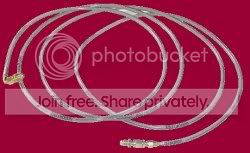
The only problem we have had is with the gears crunching. This is a known problem and is due to the fact that Lotus use a rubber hydraulic hose for the clutch, which balloons and does not allow the clutch to fully engage . The cure is simple and just requires changing the hose to a braided item .
Other than that, it doesn't run a limited slip diff, so spins which-ever wheel has the least weight on it . The idea is to fit a Quaife ATB next year .
I don't "think" we're pushing the power levels of the gearbox yet, but there are upgrades available if required.
. The cure is simple and just requires changing the hose to a braided item .Other than that, it doesn't run a limited slip diff
, so spins which-ever wheel has the least weight on it . The idea is to fit a Quaife ATB next year .I don't "think" we're pushing the power levels of the gearbox yet, but there are upgrades available if required
.


Trending Topics




20K+ Super Poster.
Joined: May 2003
Posts: 23,377
Likes: 0
I actually really like that car, if only for the looks we used to get from the Norwich school girls
Remember that moment when you hit that patch of standing water on the way back from Harvey's once
Mods look good though.....
Remember that moment when you hit that patch of standing water on the way back from Harvey's once
Mods look good though.....

I've found that life I needed.. It's HERE!!
Joined: Jul 2004
Posts: 1,294
Likes: 0
From: Cumbria/Preston
Is the ECU Lotus's own? Sounds...advanced! Did you find out what Harvey and Tim got the compressor housing-to-head losses down to from 30cfm in the end? Let us know why the boost is falling off so badly too
Did you find out what Harvey and Tim got the compressor housing-to-head losses down to from 30cfm in the end? Let us know why the boost is falling off so badly too
Originally Posted by heeman10
Is the ECU Lotus's own? Sounds...advanced! Did you find out what Harvey and Tim got the compressor housing-to-head losses down to from 30cfm in the end? Let us know why the boost is falling off so badly too
Did you find out what Harvey and Tim got the compressor housing-to-head losses down to from 30cfm in the end? Let us know why the boost is falling off so badly too .It says in my post what it was got down to you muppet

 .
.I should have the software in a few days. I'm hoping it is something simple, like ACTs or a faulty water temp sensor
.
I've found that life I needed.. It's HERE!!
Joined: Jul 2004
Posts: 1,294
Likes: 0
From: Cumbria/Preston
Re: Modified Lotus Esprit S4
Originally Posted by Mike Rainbird
This was looked at by some racing teams a few years ago, and they found that the standard inlet system lost over 30 cfm of airflow from turbo to the inlet ports . However, with a little matching of the inlet manifold to the ports, gas flowing the nozzle and plenum you could get this down to about 7-8 cfm loss. The race team got the losses from turbo to inlet on the GT1 car down to less than 5 cfm losses!


Originally Posted by Mike1
I knew you had this car Mike but you don't seem to like to talk about it?  Sounds like it is coming on well.
What happened to your Renault Clio 16v you bought by the way?
Sounds like it is coming on well.What happened to your Renault Clio 16v you bought by the way?
.The one that Charlie and I were going to do up as a track car? It still sits in the back of my garage with an inch of dust and a flat tyre
. (along with the CTR engined kit car that hasn't been touched in 12 months ).
Latest updates:
Finally figured out the problem. The GM ECU is actually extremely sophisticated in it's boost control, running a fully closed loop system. However, if it senses ANY issues with the sensors and it prevents the wastegate from being held close. One of those parameters that we only discovered today, was that if the narrow band sensor isn't getting it's target settings, then it won't allow any boost passed 4600rpm (we were using the boss to put the wideband in).
This meant that on the rollers, it was making peak power at 1.24 bar @ 4600rpm (285bhp), and then it popped the wastegate open and it then had only 0.65 bar from 5000rpm to 7000rpm (gradually reducing to this in the 400rpm increment in between).
From the runs that we did last time, we knew that there was plenty of fuel, so we left the narrowband in and spuriosly achieved the same bhp reading, as the wastegate was not man enough for the job in hand and despite the ECU trying to hold it shut, the back pressure was sufficient to overcome this, and boost tailed gradually from 4900rpm (1.24 bar) to 0.95 bar by 6100rpm (260bhp). We confirmed this by running the car up with no boost control by pulling the actuator pipe off (same boost tail) and then by holding the wastegate shut (Gary leaned in with a bar as I ran it on the rollers) and the car instantly made an extra 20bhp. Problem solved! Actuator too week.
I then sourced an uprated one (a -17 from Harvey of course) and today this was bolted in with the hope of curing all our woes. Unfortunately, to start off with, it didn't work out like that, as we thought it would be best to check the AFR seeing as we would be running an extra 0.3 bar. We knew we couldn't stuff the sensor up the exhaust (the twin exit set up gives false readings), so again the narrow band was removed and the wide band substituted in its place. Again we got a huge boost tail off above 5000rpm. We thought the actuator was not set up right, so gave it some more pre-load, again no go. We were just thinking of calling it a day, believing that the new actuator still wasn't strong enough, but I had a brain wave and said to Gary, what if the disconnection of the narrow band sensor, is sufficient to be cause for the ECU to be concerned enough to not allow any boost above 5000rpm?
It had to be worth a try, as it was a five minute job to put back the narrow band, and with no signs of knock and the fuelling more than acceptable, should give no issues. Also given the fact that the boost is run fully closed loop, I knew it would back things off if it was too far.
Instantly, power jumped by 17bhp and it made just over 300bhp. We knew we were on to something. Down-loading all the previous data-logged info, we adjourned to the warmth of Christian's office and checked everything over. As was confirmed by the rolling road, the ECU was not allowing boost above 4600 with the narrow band disconnected. Also, with the wastegate now given full ECU control, it was definitely trying to achieve it's target boost of 1.24bar to the redline, but was being pushed open at high rpm still (but holding more boost than with the old one).
Yippee, we went back to the car, knowing that adjusting the actuator a couple more turns would achieve the 310bhp I was hoping for. So the actuator was adjusted, and I asked Gary to get the charge-cooler temp down as low as possibly before the run (as the previous runs were done back to back without letting the car cool down sufficiently IMO, as ACTs were still at 40degC after each run). This time they were allowed to recover fully to 23degC before the run was started. Fuck me, but 328.4bhp (278bhp @ wheels) showed up. The logging data verified boost as being held properly (slight disparity with the rolling road) and it made an astounding 350lb ft of torque as well .
I couldn't wait to get it out on the road to see what an extra 50bhp felt like. Even with 245 tyres and all the weight on the back (mid-engined), the car was lighting the tyres up in second and struggling to contain third, it now goes like it looks and is very nice to drive on the huge wave of torque the ickle 60 trim T3 gives.
Only problem is, that when the roads dry out, I think it is going to be too much for the (just fitted new) standard AP clutch, as you can smell it struggling when you get out of the car after some high acceleration runs.
Next thing will be a larger charge-cooler radiator, as the standard one allows the ACTs to creap to 50degC at the top of 4th gear (126mph), and high ACTs lop 15-20bhp off the power. This will be a job for the Pro-alloy boys in the new year .
Edited to say thanks to Gary at APT for his patience and all his help - if you have any 2wd car, these are your people for any rolling road diagnostic work.
Finally figured out the problem. The GM ECU is actually extremely sophisticated in it's boost control, running a fully closed loop system. However, if it senses ANY issues with the sensors and it prevents the wastegate from being held close. One of those parameters that we only discovered today, was that if the narrow band sensor isn't getting it's target settings, then it won't allow any boost passed 4600rpm (we were using the boss to put the wideband in).
This meant that on the rollers, it was making peak power at 1.24 bar @ 4600rpm (285bhp), and then it popped the wastegate open and it then had only 0.65 bar from 5000rpm to 7000rpm (gradually reducing to this in the 400rpm increment in between).
From the runs that we did last time, we knew that there was plenty of fuel, so we left the narrowband in and spuriosly achieved the same bhp reading, as the wastegate was not man enough for the job in hand and despite the ECU trying to hold it shut, the back pressure was sufficient to overcome this, and boost tailed gradually from 4900rpm (1.24 bar) to 0.95 bar by 6100rpm (260bhp). We confirmed this by running the car up with no boost control by pulling the actuator pipe off (same boost tail) and then by holding the wastegate shut (Gary leaned in with a bar as I ran it on the rollers) and the car instantly made an extra 20bhp. Problem solved! Actuator too week.
I then sourced an uprated one (a -17 from Harvey of course
) and today this was bolted in with the hope of curing all our woes. Unfortunately, to start off with, it didn't work out like that, as we thought it would be best to check the AFR seeing as we would be running an extra 0.3 bar. We knew we couldn't stuff the sensor up the exhaust (the twin exit set up gives false readings), so again the narrow band was removed and the wide band substituted in its place. Again we got a huge boost tail off above 5000rpm. We thought the actuator was not set up right, so gave it some more pre-load, again no go. We were just thinking of calling it a day, believing that the new actuator still wasn't strong enough, but I had a brain wave and said to Gary, what if the disconnection of the narrow band sensor, is sufficient to be cause for the ECU to be concerned enough to not allow any boost above 5000rpm?It had to be worth a try, as it was a five minute job to put back the narrow band, and with no signs of knock and the fuelling more than acceptable, should give no issues. Also given the fact that the boost is run fully closed loop, I knew it would back things off if it was too far.
Instantly, power jumped by 17bhp and it made just over 300bhp. We knew we were on to something. Down-loading all the previous data-logged info, we adjourned to the warmth of Christian's office and checked everything over. As was confirmed by the rolling road, the ECU was not allowing boost above 4600 with the narrow band disconnected. Also, with the wastegate now given full ECU control, it was definitely trying to achieve it's target boost of 1.24bar to the redline, but was being pushed open at high rpm still (but holding more boost than with the old one).
Yippee, we went back to the car, knowing that adjusting the actuator a couple more turns would achieve the 310bhp I was hoping for. So the actuator was adjusted, and I asked Gary to get the charge-cooler temp down as low as possibly before the run (as the previous runs were done back to back without letting the car cool down sufficiently IMO, as ACTs were still at 40degC after each run). This time they were allowed to recover fully to 23degC before the run was started. Fuck me, but 328.4bhp (278bhp @ wheels) showed up
. The logging data verified boost as being held properly (slight disparity with the rolling road) and it made an astounding 350lb ft of torque as well .I couldn't wait to get it out on the road to see what an extra 50bhp felt like. Even with 245 tyres and all the weight on the back (mid-engined), the car was lighting the tyres up in second and struggling to contain third, it now goes like it looks and is very nice to drive on the huge wave of torque the ickle 60 trim T3 gives.
Only problem is, that when the roads dry out, I think it is going to be too much for the (just fitted new) standard AP clutch, as you can smell it struggling when you get out of the car after some high acceleration runs
.Next thing will be a larger charge-cooler radiator, as the standard one allows the ACTs to creap to 50degC at the top of 4th gear (126mph), and high ACTs lop 15-20bhp off the power
. This will be a job for the Pro-alloy boys in the new year .Edited to say thanks to Gary at APT for his patience and all his help - if you have any 2wd car, these are your people for any rolling road diagnostic work
.



Originally Posted by rapidcossie
sounds like it flies now Mike!
. But by comparison to what it DID have (it now has 14bhp more at the WHEELS, than it had at the flywheel from the factory ), it is great .With the exhaust, it sounds mega too and spits blue flames on the over-run (which is quite fitting, given the make of the exhaust
) .What is good is that due to it being 2.2 litre and having a tiny T3 turbo on it, it is MEGA responsive and drives like a large capacitiy N/A car
.
Euan,
Just the charge-cooler radiator upgraded.
Nath,
Can't run an intercooler, has to be a chargecooler for the reason you said, no way of fitting one that will work adequately.
Just the charge-cooler radiator upgraded.
Nath,
Can't run an intercooler, has to be a chargecooler for the reason you said, no way of fitting one that will work adequately.


lookong really nice on this mike, with the ECU holding power back isnt there an aftermarket system that u can use that wont limit the power as much as it has been??
are you still running the standard suspension on the car?
sounds like this could be a right good bit of fun once finished, good luck with it all mate!!
are you still running the standard suspension on the car?
sounds like this could be a right good bit of fun once finished, good luck with it all mate!!
The ECU is not the limit, the turbo is the limit. 365bhp is possible with an off the shelf turbo and would require just different injectors. Trouble is, you're then getting to the limits of the gearbox, and the Quaife transaxle is best part of £10k .
Suspension is standard at the moment, by "may" be changed at a later date. The car has only done 35,000 miles now, so is still very taught.
Will possibly fit a Quaife ATB, as the open diff gives "unusual" handling traits.
.Suspension is standard at the moment, by "may" be changed at a later date. The car has only done 35,000 miles now, so is still very taught
.Will possibly fit a Quaife ATB, as the open diff gives "unusual" handling traits
.
ah, i get you now.
well all in all good luck with this car, they're absolutely stunning all round so cant wait to see what the final finished product will be like (if u ever stop spending money on it of course!)
closest ive ever got to driving one of these if through my xbox 360 on test drive unlimited
feel sorry for your bank balance after the diff is bought if u change it tho
just out of interest, how much do these cars sell for nowadays? i know i'll never own unless i get my Sgt Major's commission but every day theres one of them going around by the barracks guardroom at 4pm and its for sale but didnt see how much for on the window
well all in all good luck with this car, they're absolutely stunning all round so cant wait to see what the final finished product will be like (if u ever stop spending money on it of course!)
closest ive ever got to driving one of these if through my xbox 360 on test drive unlimited
feel sorry for your bank balance after the diff is bought if u change it tho
just out of interest, how much do these cars sell for nowadays? i know i'll never own unless i get my Sgt Major's commission but every day theres one of them going around by the barracks guardroom at 4pm and its for sale but didnt see how much for on the window
Originally Posted by H19-DJA
ah, i get you now.
well all in all good luck with this car, they're absolutely stunning all round so cant wait to see what the final finished product will be like (if u ever stop spending money on it of course!)
closest ive ever got to driving one of these if through my xbox 360 on test drive unlimited
feel sorry for your bank balance after the diff is bought if u change it tho
just out of interest, how much do these cars sell for nowadays? i know i'll never own unless i get my Sgt Major's commission but every day theres one of them going around by the barracks guardroom at 4pm and its for sale but didnt see how much for on the window
well all in all good luck with this car, they're absolutely stunning all round so cant wait to see what the final finished product will be like (if u ever stop spending money on it of course!)
closest ive ever got to driving one of these if through my xbox 360 on test drive unlimited
feel sorry for your bank balance after the diff is bought if u change it tho
just out of interest, how much do these cars sell for nowadays? i know i'll never own unless i get my Sgt Major's commission but every day theres one of them going around by the barracks guardroom at 4pm and its for sale but didnt see how much for on the window
Tatty ones go for £12k, good ones £15-17 and this one would need to be over £20k due to it's condition, low mileage and sensible mods.
Originally Posted by Mike Rainbird
Originally Posted by H19-DJA
ah, i get you now.
well all in all good luck with this car, they're absolutely stunning all round so cant wait to see what the final finished product will be like (if u ever stop spending money on it of course!)
closest ive ever got to driving one of these if through my xbox 360 on test drive unlimited
feel sorry for your bank balance after the diff is bought if u change it tho
just out of interest, how much do these cars sell for nowadays? i know i'll never own unless i get my Sgt Major's commission but every day theres one of them going around by the barracks guardroom at 4pm and its for sale but didnt see how much for on the window
well all in all good luck with this car, they're absolutely stunning all round so cant wait to see what the final finished product will be like (if u ever stop spending money on it of course!)
closest ive ever got to driving one of these if through my xbox 360 on test drive unlimited
feel sorry for your bank balance after the diff is bought if u change it tho
just out of interest, how much do these cars sell for nowadays? i know i'll never own unless i get my Sgt Major's commission but every day theres one of them going around by the barracks guardroom at 4pm and its for sale but didnt see how much for on the window
Tatty ones go for £12k, good ones £15-17 and this one would need to be over £20k due to it's condition, low mileage and sensible mods.


It's a phase 2 .
Anyway, the Lotus has been slowly coming along, having been living at Pro-alloy for the last couple of months.
The reason being the radiator shat itself - as you can see it looks like a bee-hive :

A close up of the main water radiator showing leaking area - apart from being 50% blocked with road debris - it is as rotten as 6 week old road kill. I think this is because it has always remained damp on the outside due to the sodden crud stuck to it over the years! The front spoiler is designed to channel a huge amount of airflow to the radiators - unfortunately with this comes the dirt and thousands of suicidal insects!

This is the offside oil cooler showing the broken outlet fitting.. Unfortunatley you need to remove this fitting so you can get to the radiator, which subsequently just fell off. As you can
see its in quite a poor condition generally - again down to the efficency of the spoiler and the fact that the flat floor prevents cleaning access.

Nearside oil cooler showing damage causing a slight leak (see next
pic also!):

Oil cooler showing result of aged oil leak!!
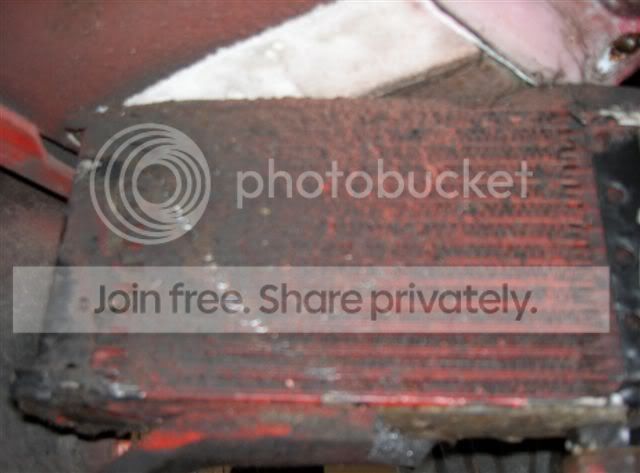
Here is the conjoined charge-cooler radiator and air-con condensor - the lower part is the air con. This appears to have had a leak as there was no gas in the system! Seems a very inefficient set-up, so I realised this could be vastly improved upon.

Another view of air con / pre-rad:

Now the oil coolers have been replaced with brand new ones and the radiator upgraded and a HUGE charge-cooler radiator, so performance should be maintained thought and mean it will enjoy track use much more.
Here is the automotive sexual bit :

WHO'S YA DADDY?! - Pro-alloy of course!
.Anyway, the Lotus has been slowly coming along, having been living at Pro-alloy for the last couple of months
.The reason being the radiator shat itself - as you can see it looks like a bee-hive
:A close up of the main water radiator showing leaking area - apart from being 50% blocked with road debris - it is as rotten as 6 week old road kill
. I think this is because it has always remained damp on the outside due to the sodden crud stuck to it over the years! The front spoiler is designed to channel a huge amount of airflow to the radiators - unfortunately with this comes the dirt and thousands of suicidal insects! This is the offside oil cooler showing the broken outlet fitting.. Unfortunatley you need to remove this fitting so you can get to the radiator, which subsequently just fell off
. As you cansee its in quite a poor condition generally - again down to the efficency of the spoiler and the fact that the flat floor prevents cleaning access.
Nearside oil cooler showing damage causing a slight leak (see next
pic also!):
Oil cooler showing result of aged oil leak!!
Here is the conjoined charge-cooler radiator and air-con condensor - the lower part is the air con. This appears to have had a leak as there was no gas in the system! Seems a very inefficient set-up, so I realised this could be vastly improved upon
.Another view of air con / pre-rad:
Now the oil coolers have been replaced with brand new ones and the radiator upgraded and a HUGE charge-cooler radiator, so performance should be maintained thought and mean it will enjoy track use much more
.Here is the automotive sexual bit
:WHO'S YA DADDY?! - Pro-alloy of course!