When you click on links to various merchants on this site and make a purchase, this can result in this site earning a commission. Affiliate programs and affiliations include, but are not limited to, the eBay Partner Network.
General Car Related Discussion.To discuss anything that is related to cars and automotive technology that doesnt naturally fit into another forum catagory.
Ok you guys I know this is not the technical area but thought id throw a question out there that might be of interest to the Cosworth YB owners.
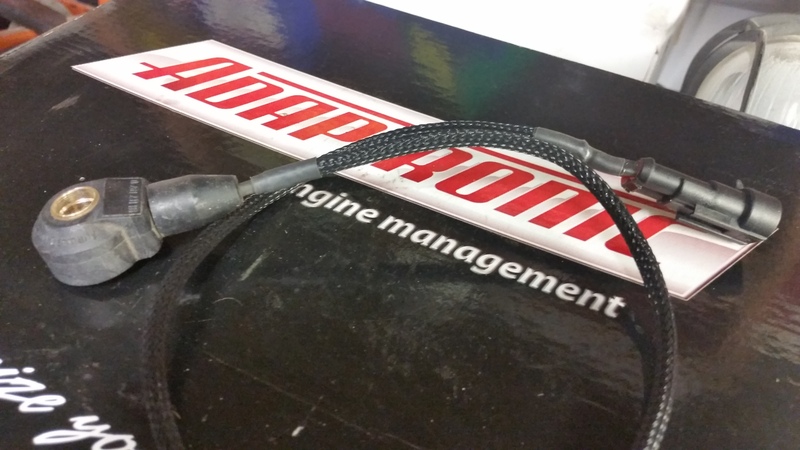
Knock sensor and sensing.
The 4x4 came with this as std, but, the sensor sits almost on the upper sump line, this sensor screws right into the bottom of the block.
Now, I want active knock monitoring on my car but do feel this is a long way from the combustion chamber to be accurately measuring early knock.
Ok, its sensing vibration and some might say it will pick this up, but my car is a rally car, the engine is all but solid mounted along with all the rest if the NVH around the car I feel better positioning of the knock sensor would only help.
But, the YB has no other block mounting point. Trying to keep away from the exhaust side as much as possible, the only idea so far, extend one of the inlet manifold studs and mount it on there?
I should have drilled the head when it was off really, but thats now not an option.
A sensor for ECU control does normally have a dedicated place on the block, but I've put them almost everywhere in the past to listen to knock. Even on the metal back plate which bolts the engine to the dyno, so I wouldn't worry too much. Remember it's only the high frequency stuff that you need to pick up
If you used an inlet manifold stud I don't think you'd get the full surface area of the sensor touching metal would you?
Closer to the combustion chamber the better..but you also want it away from valvetrain noise, and OEM tend to install them on the intake side of an engine, although not always.
There are considerations...but if it wont go somewhere easily, you just have to try elsewhere
The best place is in a position thats an enequal distance from every cylinder, thats assuming your ecu can determine knock per individual cylinder from just one sensor.
The second best place is potentially the "end" of the engine.
The third best option is usually the inlet manifold and this is the option that is at least normally the easiest, but also one of the noisiest.
The worst place is probably directly on the cylinder head.
Once its mounted, you need to create a frequency profile. I dont have any ECU screenshots to illustrate this, but the knock system should give similar data so your going to be looking at data something along these lines:
Then you need to profile the engine sound with some safe spark lead and create a "Known Good" noise with which to reference change from.
The Plex system actually makes this quite easy to understand, but ive no idea how its going to work in your ECU. You end up with a baseline noise curve from the engine (everything below the line) and this line becomes your known "Knock Threshold". Once this is created you can essentially tell the ecu that if it hears noise above that line from now on, its knock!
This plex stock image shows some.
Once its all done, if your ECU allows, you can even create a nice knock table from it with load and RPM axis.
You will probably end up with a table that looks something like this: This is normally the table used as a reference to create the borderline knock table on ECU's that actively control load. (Pretty much all OE ECU's of the last 10= years work this way).
"Accurate" knock monitoring is for me by far the hardest part of setting up an engine management system and to be fair, it can and almost always does take so damn long you cant realistically charge enough money to make the job worth taking on. Its complex, extremely dangerous to the engine and fucking infuriating creating a baseline audio profile that actually "works" properly.
In other words - Just the kind of job you like mate!
I realise you know a lot of this, but I figuerd if I was going to answer, I would add some data that useful for anyone reading, not just the OP.
Last edited by Stu @ M Developments; Apr 26, 2016 at 03:43 PM.
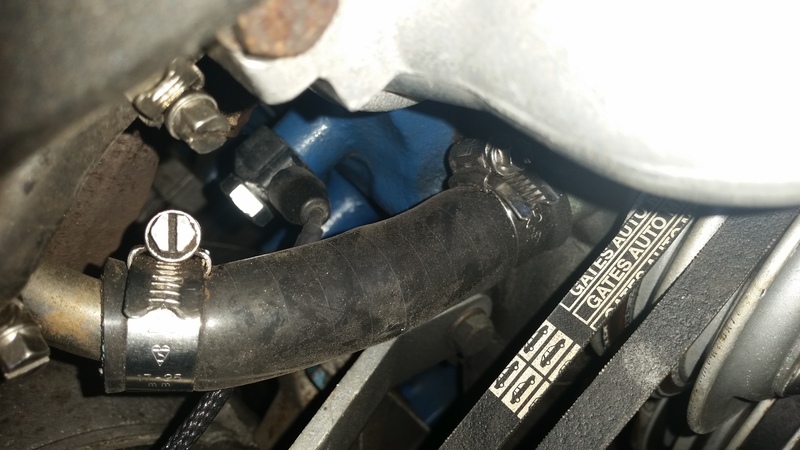
I haven't got around to setting up the active knock control on mine, but I fitted and wired the sensor. Seems to work well enough. It's on the exhaust side, towards the front, above the alternator mount.
I haven't got around to setting up the active knock control on mine, but I fitted and wired the sensor. Seems to work well enough. It's on the exhaust side, towards the front, above the alternator mount.
I think this could be an option but some serious heat management would be required
As an aside, hows the compressor inlet depression boost control project coming along now?
I think we are on it, (time is scarce atm though).
Nice pressure transducer is mounted and wired, input source has been set against a user scalar raw table to a variable pwm output.



 Technical types: knock sensing