


AFR readings - Cosworth


 AFR readings - Cosworth
Hi
Just got my Stack AFR installed
Nice bit of kit, easy to install and fits nicely next to the SPA gauges
Im running closed loop from MSD on a T3 peaking at 2 bar
on idle I have 14,7 (sometimes it takes a little while to settle though)
on wot my AFR shows....10 , to me that is a "bit" rich - correct?
on cruise it fluctuates from 14,5 to 15,2 - very rapidly.
I would have thought that on cruise it should just settle close to 14,7 like it does when idling.
my CO screw on the ECU is centralized - so thinking of adjusting it to go a little leaner, and aim for about 11,5 AFR on WOT.
what do you think?
thanks
Just got my Stack AFR installed
Nice bit of kit, easy to install and fits nicely next to the SPA gauges
Im running closed loop from MSD on a T3 peaking at 2 bar
on idle I have 14,7 (sometimes it takes a little while to settle though)
on wot my AFR shows....10
, to me that is a "bit" rich - correct? on cruise it fluctuates from 14,5 to 15,2 - very rapidly.
I would have thought that on cruise it should just settle close to 14,7 like it does when idling.
my CO screw on the ECU is centralized - so thinking of adjusting it to go a little leaner, and aim for about 11,5 AFR on WOT.
what do you think?
thanks




btw...2 bar, ALS and no Dumbvalve
 lol - I'll try and see if I can reach about 11.5

Trending Topics

if your cruise fluctuates from 14.5-15.2, you really don't want to be making the whole range leaner.
otherwise you will compromise idle and off boost driving, what you do need to do is make sure the gauge is accurate and get it to a tuner.
otherwise you will compromise idle and off boost driving, what you do need to do is make sure the gauge is accurate and get it to a tuner.



Testing the future
Joined: Jul 2003
Posts: 17,597
Likes: 24
From: W. Sussex
it has to on closed loop control as the sensor is non linear and essentially is just a switch so that the ecu knows it's either rich or lean so it cycles around that point.
adjusting your global modifier will affect the whole range whilst out of closed loop (with attendant potential problems as already mentioned by Rick), but as you seem to understand already there should be enough adjustment available by the closed loop control for it to be able to stay under closed loop control around stoich at idle and cruise.
adjusting your global modifier will affect the whole range whilst out of closed loop (with attendant potential problems as already mentioned by Rick), but as you seem to understand already there should be enough adjustment available by the closed loop control for it to be able to stay under closed loop control around stoich at idle and cruise.


PassionFord Post Whore!!
Joined: Jun 2003
Posts: 5,472
Likes: 223
From: Marlow Bucks
Hi
Just got my Stack AFR installed
Nice bit of kit, easy to install and fits nicely next to the SPA gauges
Im running closed loop from MSD on a T3 peaking at 2 bar
on idle I have 14,7 (sometimes it takes a little while to settle though)
on wot my AFR shows....10, to me that is a "bit" rich - correct?
on cruise it fluctuates from 14,5 to 15,2 - very rapidly.
I would have thought that on cruise it should just settle close to 14,7 like it does when idling.
my CO screw on the ECU is centralized - so thinking of adjusting it to go a little leaner, and aim for about 11,5 AFR on WOT.
what do you think?
thanks
Just got my Stack AFR installed
Nice bit of kit, easy to install and fits nicely next to the SPA gauges
Im running closed loop from MSD on a T3 peaking at 2 bar
on idle I have 14,7 (sometimes it takes a little while to settle though)
on wot my AFR shows....10
, to me that is a "bit" rich - correct? on cruise it fluctuates from 14,5 to 15,2 - very rapidly.
I would have thought that on cruise it should just settle close to 14,7 like it does when idling.
my CO screw on the ECU is centralized - so thinking of adjusting it to go a little leaner, and aim for about 11,5 AFR on WOT.
what do you think?
thanks
The stacks I have seen all show rich under boost, So I would guess its about right, Get it checked by someone has a good meter and not a cheap gauge.
Mark
my stack from rainbird showed 11.4 on my old msd mapped cossie, and it was mapped at 11.2 - 11.3 by stu, i remeber commenting at the time on how chuffed i was with how accurate it was compared to stus ££££ gear.

Would it make sense that a live mapped car would have some much nicer afr numbers compared to a of the shelf chip, wich I would believe would be made safe (obviously from the same company)
Thanks guys for input 
Just a couple of comments and questions
very good point didn't think of that - but still 10....
unfortunately Stu is not in the office at the moment, so will have to wait til his back.
3 bar at idle as per Stus instructions, dark greens.
My fuel pressure peaks at 5,6 bar according to the SPA.
But why doesn't it cycle on idle? - it sits perfectly at 14,7
To my knowdledge I can go adjust +-25 on the IAW monitor and still maintain closed loop operation on cruise etc. as you also explain (1 turn in either direction is about +-15 on the IAW) I have actually tried going from the centralized CO screw to 1 turn leaner, and it made no difference to WOT that I could see.
Your not the first on this thread to suggest that. And although it does seem a good idea, I do feel that I should wait for the tuner who made the chip in the first place to clearify. Being an of the shelf chip, I did also make the choice to save some money and sacrify a little on the 100% perfect setup. I just find the readings a bit strange. Another issue is that, here in Denmark I wouldn't know who I would trust to make adjustment
In you mind, what is a good meter - for dashboard installation ?
I recall some high powered cars to run these - are they really that bad?
what I have thought, but didn't think it would be this much.
another aproach is that the chip is fine, but I have a fault somewhere.
What could cause this besides the chip being set to this
I mean what faults could cause this?
knowing that no sensor faults is shown on the IAW monitor.
thanks again
Just a couple of comments and questions
unfortunately Stu is not in the office at the moment, so will have to wait til his back.
3 bar at idle as per Stus instructions, dark greens.
My fuel pressure peaks at 5,6 bar according to the SPA.
it has to on closed loop control as the sensor is non linear and essentially is just a switch so that the ecu knows it's either rich or lean so it cycles around that point.
adjusting your global modifier will affect the whole range whilst out of closed loop (with attendant potential problems as already mentioned by Rick), but as you seem to understand already there should be enough adjustment available by the closed loop control for it to be able to stay under closed loop control around stoich at idle and cruise.
adjusting your global modifier will affect the whole range whilst out of closed loop (with attendant potential problems as already mentioned by Rick), but as you seem to understand already there should be enough adjustment available by the closed loop control for it to be able to stay under closed loop control around stoich at idle and cruise.
To my knowdledge I can go adjust +-25 on the IAW monitor and still maintain closed loop operation on cruise etc. as you also explain (1 turn in either direction is about +-15 on the IAW) I have actually tried going from the centralized CO screw to 1 turn leaner, and it made no difference to WOT that I could see.
Your not the first on this thread to suggest that. And although it does seem a good idea, I do feel that I should wait for the tuner who made the chip in the first place to clearify. Being an of the shelf chip, I did also make the choice to save some money and sacrify a little on the 100% perfect setup. I just find the readings a bit strange. Another issue is that, here in Denmark I wouldn't know who I would trust to make adjustment
I recall some high powered cars to run these - are they really that bad?
another aproach is that the chip is fine, but I have a fault somewhere.
What could cause this besides the chip being set to this
I mean what faults could cause this?
knowing that no sensor faults is shown on the IAW monitor.
thanks again

Wahay!! I've lost my Virginity!!
Joined: Jul 2010
Posts: 73
Likes: 0
From: Geneva, Switzerland
Lambda 0.68 (what you call 10:1 AFR) is filthy rich, the engine does not produces its full power potential and does not need much more to start misfiring. I'd also start to worry about cylinder washing.
Perhaps the tuner was not so sure about his ignition map and preferred to err on the safe side by dumping so much fuel, drowning some detonation in the process?
Perhaps the tuner was not so sure about his ignition map and preferred to err on the safe side by dumping so much fuel, drowning some detonation in the process?
Testing the future
Joined: Jul 2003
Posts: 17,597
Likes: 24
From: W. Sussex
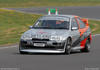
That's strange, I have compared the Stack gauge to our dyno DD AFR reader (Autronics make it for DD) and have found them to almost spot on (give or take .1), I did find that the reading was incorrect during warm up though.

I'm running the same chip by the looks of it, and remember reading the instructions that 25psi was max boost for it (2bar = 28-29psi).
I'd adjust CO screw to lean the WOT into the 11's, and idle should still be controlled by closed loop.
Just confirm with a garages CO meter that yours is about similar.
I'd adjust CO screw to lean the WOT into the 11's, and idle should still be controlled by closed loop.
Just confirm with a garages CO meter that yours is about similar.
PassionFord Post Whore!!
Joined: Jun 2003
Posts: 5,472
Likes: 223
From: Marlow Bucks
Mark
PassionFord Post Whore!!
Joined: Jun 2003
Posts: 5,472
Likes: 223
From: Marlow Bucks
genuine question here - not trying to be awkward
PassionFord Post Whore!!
Joined: Jun 2003
Posts: 5,472
Likes: 223
From: Marlow Bucks
The DD rr sensor is a diff bosch one also its not the same as the Stack sensor.
Mark

10K+ Poster!!
Joined: Jun 2004
Posts: 11,058
Likes: 7
From: Huntingdon
PassionFord Post Whore!!
Joined: Jun 2003
Posts: 5,472
Likes: 223
From: Marlow Bucks
,You will be suppriesed how much faster the meter reads and changes afr compared to the bosch one, which I never use now due to the diff,
Autronic sells the Bosch sensor to cover 90% of your tuning needs but for the turbo cars we need the final 10%
 which is where the cost is,
You have to much more carefull with them over the bosch as you can damage them,
You would need to make sure your dyno has the model B meter as the up to about 5 years ago the dynos came with Model A meters and these only use the bosch.
Mark

Norris Motorsport
Joined: May 2003
Posts: 3,437
Likes: 3
From: Derbyshire
Totally agree with Mark Shead. The Stack AFR 52mm gauge all seem to read around 0.5AFR too rich on boost, though they seem to to reasonably accurate around stoich. For example a true 11.5:1 will show up as 11.0:1 on the stack. The Stack gauge is an re-branded autometer item for those that did'nt know!
Last edited by Karl; Sep 24, 2011 at 01:39 PM.
Its sold by Autronic for there meter so it comes through me,
You will be suppriesed how much faster the meter reads and changes afr compared to the bosch one, which I never use now due to the diff,
Autronic sells the Bosch sensor to cover 90% of your tuning needs but for the turbo cars we need the final 10% which is where the cost is,
You have to much more carefull with them over the bosch as you can damage them,
You would need to make sure your dyno has the model B meter as the up to about 5 years ago the dynos came with Model A meters and these only use the bosch.
Mark
,You will be suppriesed how much faster the meter reads and changes afr compared to the bosch one, which I never use now due to the diff,
Autronic sells the Bosch sensor to cover 90% of your tuning needs but for the turbo cars we need the final 10%
which is where the cost is,You have to much more carefull with them over the bosch as you can damage them,
You would need to make sure your dyno has the model B meter as the up to about 5 years ago the dynos came with Model A meters and these only use the bosch.
Mark
How the hell do you know??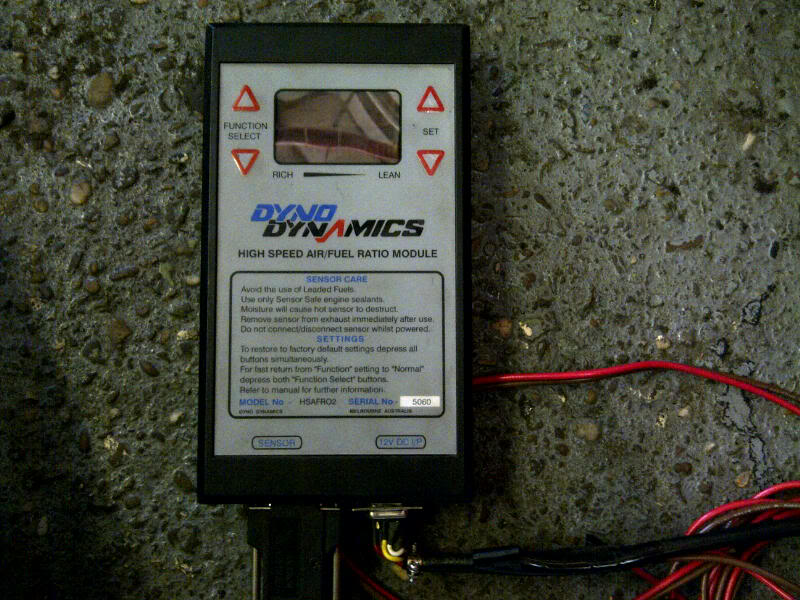
PassionFord Post Whore!!
Joined: Jun 2003
Posts: 5,472
Likes: 223
From: Marlow Bucks
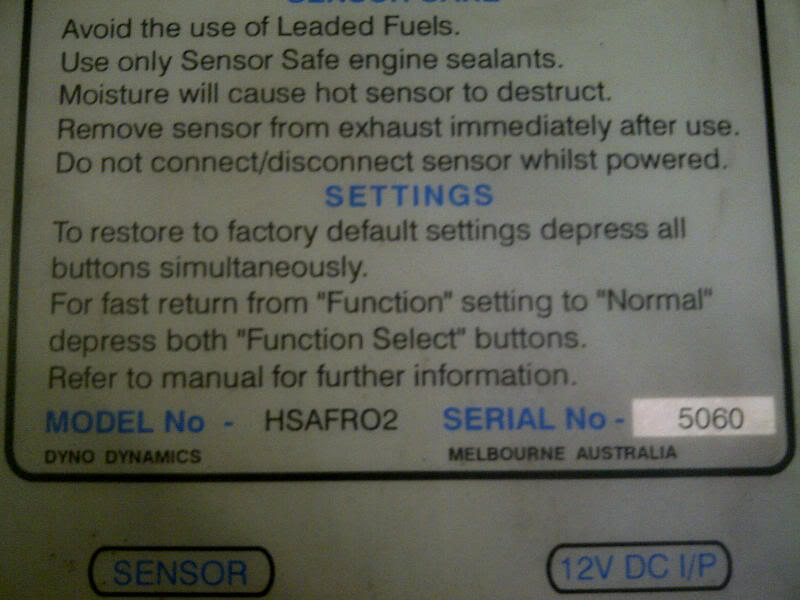
I dont know as its badged DD when its got autronic on it this has the number on the front,
Speak to DD and ask them to check, or do you have another lead that has ntk o n it or the single lambda cable instead of your 2 connector bosch one.
Mark
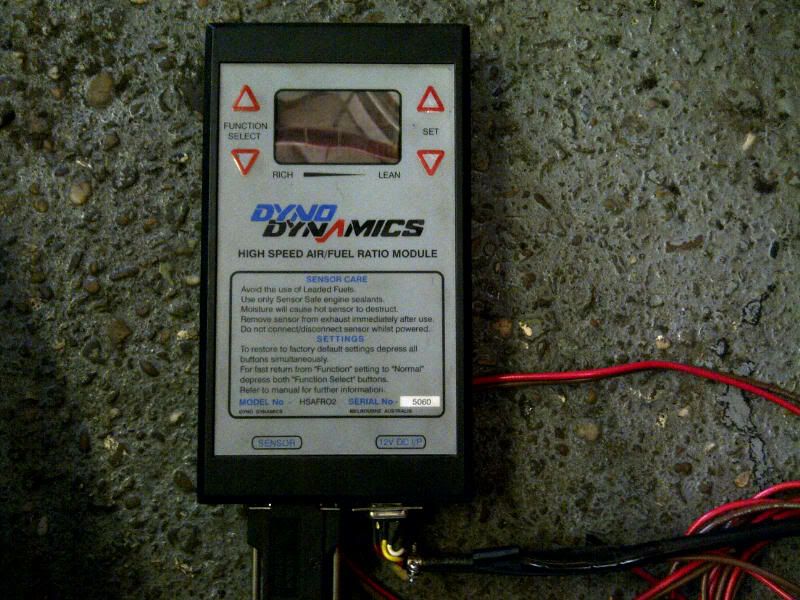
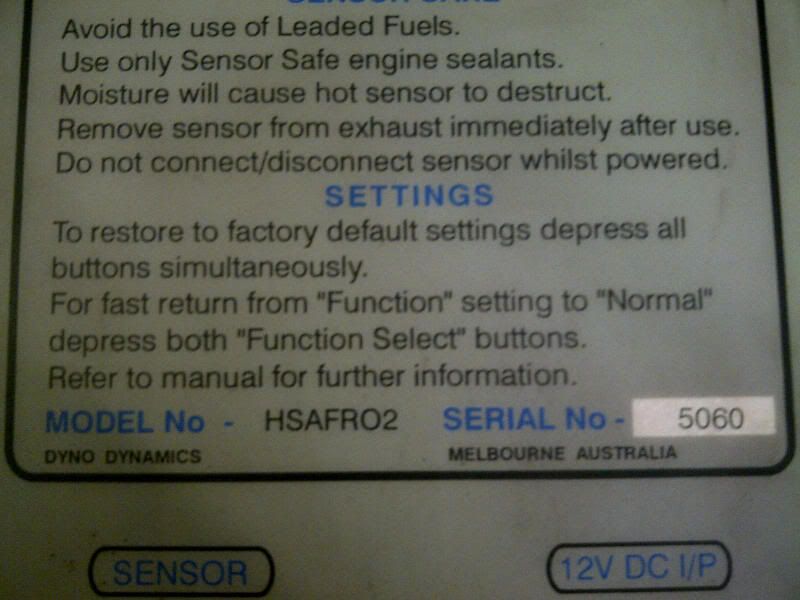 as its badged DD when its got autronic on it this has the number on the front,
Speak to DD and ask them to check, or do you have another lead that has ntk o n it or the single lambda cable instead of your 2 connector bosch one.
Mark

I've found that life I needed.. It's HERE!!


Joined: May 2003
Posts: 1,144
Likes: 9
PassionFord Post Whore!!
Joined: Jun 2003
Posts: 5,472
Likes: 223
From: Marlow Bucks
Mark
Just wondering what the reason is that it is on boost that it should read wrong?
I mean how does the sensor "know" that the car is on boost.
How about a high reving NA engine - would that read correct?
does it make a difference if the boost is 1 bar or 2.5 bar?
what about the size of the turbo - does that influence the incorrect reading?
and what if the boost comes in lower revs compared to higher revs - is that still the same.
I am just mildly sceptical to the statement: "it reads 0.5 AFR rich on boost"
Is that just a very simplified explanation, or is there no more to it?
I mean how does the sensor "know" that the car is on boost.
How about a high reving NA engine - would that read correct?
does it make a difference if the boost is 1 bar or 2.5 bar?
what about the size of the turbo - does that influence the incorrect reading?
and what if the boost comes in lower revs compared to higher revs - is that still the same.
I am just mildly sceptical to the statement: "it reads 0.5 AFR rich on boost"
Is that just a very simplified explanation, or is there no more to it?
Just wondering what the reason is that it is on boost that it should read wrong?
I mean how does the sensor "know" that the car is on boost.
How about a high reving NA engine - would that read correct?
does it make a difference if the boost is 1 bar or 2.5 bar?
what about the size of the turbo - does that influence the incorrect reading?
and what if the boost comes in lower revs compared to higher revs - is that still the same.
I am just mildly sceptical to the statement: "it reads 0.5 AFR rich on boost"
Is that just a very simplified explanation, or is there no more to it?
I mean how does the sensor "know" that the car is on boost.
How about a high reving NA engine - would that read correct?
does it make a difference if the boost is 1 bar or 2.5 bar?
what about the size of the turbo - does that influence the incorrect reading?
and what if the boost comes in lower revs compared to higher revs - is that still the same.
I am just mildly sceptical to the statement: "it reads 0.5 AFR rich on boost"
Is that just a very simplified explanation, or is there no more to it?
Probably just not correct at that point in the scale

Thread
Thread Starter
Forum
Replies
Last Post
JK12
Pictures, video & Photoshop Forum
33
Apr 26, 2021 12:09 PM
Focosmitch
Ford RS Cosworth Parts for Sale
2
Aug 14, 2015 07:29 AM
