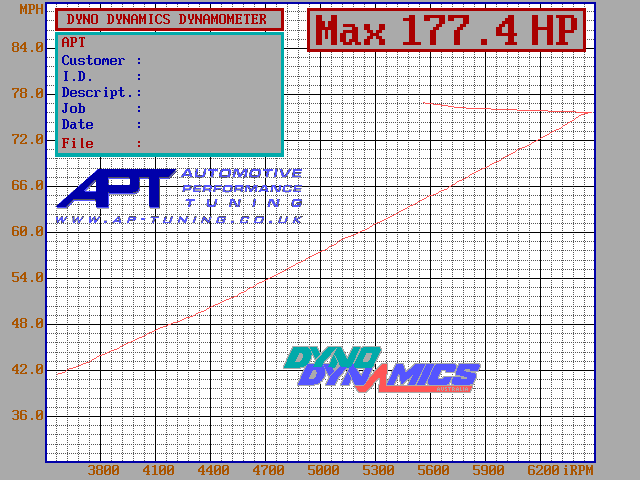
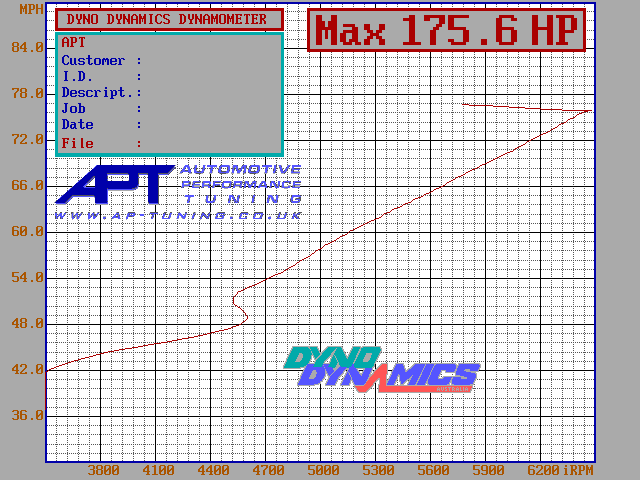
If you look at these graphs, the axis' represent actual speed and RPM. For those that don't understand the technical aspect of RR runs, let me clarify.
If a car is accelerating, whether it be on the Rollers or on the road, in relation to the Speed, the RPM must rise in a linear fashion, in other words, the speed and RPM rise proportionally.
If the RPM rises, but the speed doesn't follow a similar linear pattern, then traction has been lost. Imagine what it is like on the road, you plant your foot in second, it breaks traction and the RPM shoots right round, but you don't really go much faster.
The first graph shows a successful run, where the Speed vs RPM plot is a straight line, rising in a proportional manner (otherwise known as 'linear'). There was categorically no wheelspin on this run......
This graph shows a glitch at around 4600rpm, which is about when peak torque is produced on this car. Traction was lost here. That run should be disregarded.......
Of course it is important to measure RPM accurately too. Alot of RR operators for ease just use the car's RPM gauge, but these are notoriously innacurate. The best way is to probe an ECU pin or use an HT pickup.
I hope this helps people understand a bit about loss of traction on the dyno and the significance of it in relation to the accuracy of the results.