


Tuners can you clear this up? Airbox Vs. Cone filter?

Thread Starter


Joined: Jul 2003
Posts: 8,293
Likes: 78
From: Aberdeen
 Tuners can you clear this up? Airbox Vs. Cone filter?
Ok I've heard this myth so many times on here about fitting a std or slightly modded airbox to a cossie is BETTER than a cone due to heat soak blah blah blah......
So can someone in the know explain this further,
1) does the cone flow more air than the box (disregarding heat soak)
I would think so??
2) Have you ever done a comparison (with figures) with the same car on both setups
3) Which one is better in your opinion???? (you can base this on power output or drivablility or sound Lol whichever you prefer)
Thanks, I'm sure alot of people would be interested in this so all feel free to respond.
So can someone in the know explain this further,
1) does the cone flow more air than the box (disregarding heat soak)
I would think so??
2) Have you ever done a comparison (with figures) with the same car on both setups
3) Which one is better in your opinion???? (you can base this on power output or drivablility or sound Lol whichever you prefer)
Thanks, I'm sure alot of people would be interested in this so all feel free to respond.

Ban[B][/B]ned
Joined: Jul 2005
Posts: 34,090
Likes: 0
From: The Pool.

20K+ Super Poster.
Joined: Jun 2003
Posts: 22,888
Likes: 0
From: Local, when i'm home...
Thread Starter
Joined: Jul 2003
Posts: 8,293
Likes: 78
From: Aberdeen
Lol no your right, basically in the first question i'm talking about rolling road Vs. real road conditions, i.e better airflow and cooler air as apposed to car being on the rollers with a fan infront of it. (so heat soak is not really a factor or as big an issue)
Trending Topics

Advanced PassionFord User
Joined: Jul 2006
Posts: 1,516
Likes: 0
From: Killie
Its not a cossie, but when my engine for my track car was being mapped, we logged flow rates using a new standard air filter, old air filter, k & n panel filter in the airbox, k&n cone bolted direct to the turbo and an off the shelf induction kit fitted for the car.
There was no distinguishable difference in flow rates. In the end, I used the airbox with k&n panel filter, purely as the k&n was cheaper than a standard filter.
The airbox has has all flaps of plastic etc removed from the inside and the original rubber pipe replaced with a silicone item.
As for driveability, then low end response is slightly better, and less jerky, but the car never really spends any time at low end so its not much of a benefit. On a road car, then I'm sure it wld be better.
There was no distinguishable difference in flow rates. In the end, I used the airbox with k&n panel filter, purely as the k&n was cheaper than a standard filter.
The airbox has has all flaps of plastic etc removed from the inside and the original rubber pipe replaced with a silicone item.
As for driveability, then low end response is slightly better, and less jerky, but the car never really spends any time at low end so its not much of a benefit. On a road car, then I'm sure it wld be better.

Too many posts.. I need a life!!
Joined: Sep 2006
Posts: 918
Likes: 0
Again not Cossie but a pair of Mondeo ST200's and I have just wrote this on www.stownersclub.com in response to a similar question:
I have done a lot of reasearch into this as we have the luxury of a pair of 200's to play around with. We have tested standard 200 filter, K&N Panel filter, K&N Cone and PiperX Viper with a laptop setup on both cars.
We did the tests on the same day using the standard filter in one car and the K&N in the other. Drove for 50 miles and then swapped them and drove back resetting the ecu in between.
We then did the same with the K&N cone and the Viper. The K&N had two three inch cold air feeds on it.
All runs included ten mile around town and then a forty mile spirited drive.
The results show that whilst the air intake temperature was higher on the cone & Viper whilst at standstill by anything upto 28 degrees once moving it dropped to 1 or 2 degrees above the ambient air temperture whereas the standard airbox ran at an average of 8 degrees over ambient. This means that once running the cone and Viper were better than the standard airbox.
As for airflow then the K&N cone was world's better than the others at standstill but on the open road the Viper came very close due to the ram air effect.
Overall I will always go for the cone with plenty of cold air feeds, then the Viper followed by the K&N panel filter.
We are still running one car with the K&N (the estate) and one with the Viper as Clare likes the fact that the Viper is slightly quieter. I on the other hand love the way the estate sounds and goes so dont care.
I have done a lot of reasearch into this as we have the luxury of a pair of 200's to play around with. We have tested standard 200 filter, K&N Panel filter, K&N Cone and PiperX Viper with a laptop setup on both cars.
We did the tests on the same day using the standard filter in one car and the K&N in the other. Drove for 50 miles and then swapped them and drove back resetting the ecu in between.
We then did the same with the K&N cone and the Viper. The K&N had two three inch cold air feeds on it.
All runs included ten mile around town and then a forty mile spirited drive.
The results show that whilst the air intake temperature was higher on the cone & Viper whilst at standstill by anything upto 28 degrees once moving it dropped to 1 or 2 degrees above the ambient air temperture whereas the standard airbox ran at an average of 8 degrees over ambient. This means that once running the cone and Viper were better than the standard airbox.
As for airflow then the K&N cone was world's better than the others at standstill but on the open road the Viper came very close due to the ram air effect.
Overall I will always go for the cone with plenty of cold air feeds, then the Viper followed by the K&N panel filter.
We are still running one car with the K&N (the estate) and one with the Viper as Clare likes the fact that the Viper is slightly quieter. I on the other hand love the way the estate sounds and goes so dont care.

rog
euan will post but ava have done plenty tests on the rollers. airbox every time hence me just buying one
i've also seen an rs2k 4x4 at ava back to back with and without cone and the airbox was 8-10bhp more!
euan will post but ava have done plenty tests on the rollers. airbox every time hence me just buying one
i've also seen an rs2k 4x4 at ava back to back with and without cone and the airbox was 8-10bhp more!
Thread Starter
Joined: Jul 2003
Posts: 8,293
Likes: 78
From: Aberdeen
Excellent guys, just the kind of stuff I was looking for!
I don't really see there would be much different in the cossie finding as the overall principles are still the same.
I don't really see there would be much different in the cossie finding as the overall principles are still the same.
Thread Starter
Joined: Jul 2003
Posts: 8,293
Likes: 78
From: Aberdeen
Chop, were these all done on the RR though, as that will always give a better reading than a cone if the car is standing still IMO, good if you want to get a good RR figure but what about when the car is actually moving?
Depends how you fit the cone filter i would think if you fit a cone and sheild it like Rod and Yum have done. I refitted a box after hearing of the testing ava have done but if i end up using a 100mm inlet turbo will switch back to a cone and fit it in a enclosed box.

Well I've just fitted a grp a cone but apparantly the grp a cars didn't have a cone fitted 
once the car is rolling it reduces the sucking in of hot air
the noise factor is good so I'm told, I havn't had the car out on the street yet so I'm eager to see what its all about
Pic for you all

Luciano
once the car is rolling it reduces the sucking in of hot air
the noise factor is good so I'm told, I havn't had the car out on the street yet so I'm eager to see what its all about
Pic for you all
Luciano

20K+ Super Poster.
Joined: May 2003
Posts: 23,377
Likes: 0

Well I've just fitted a grp a cone but apparantly the grp a cars didn't have a cone fitted
once the car is rolling it reduces the sucking in of hot air
the noise factor is good so I'm told, I havn't had the car out on the street yet so I'm eager to see what its all about
Pic for you all
Luciano
once the car is rolling it reduces the sucking in of hot air
the noise factor is good so I'm told, I havn't had the car out on the street yet so I'm eager to see what its all about
Pic for you all
Luciano
looks great mate.
i must admit the cone noise sounds ace. But im going down the "function" route rather than looks

I see you have a dump valve but you'll get a slight chatter then dump if you back off slowly



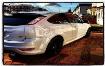
On my focus I run a K&N 57i with auto specialists headshield, ST170 snorkel with some hoses I adapted to aim directly at the filter and 2.0 auto air deflector


You cant quite see the cold air feed but it is DIRECTLY under the filter aiming straight at it. Mine I would say does suffer from heatsoak so I am thinking of enclosing it better and adding a second cold air feed from the bottom grille past th battery tray and round the other side
You cant quite see the cold air feed but it is DIRECTLY under the filter aiming straight at it. Mine I would say does suffer from heatsoak so I am thinking of enclosing it better and adding a second cold air feed from the bottom grille past th battery tray and round the other side

Former Sponsor
Joined: Sep 2003
Posts: 5,730
Likes: 0
From: in the nite garden

20K+ Super Poster.
Joined: Jun 2003
Posts: 22,888
Likes: 0
From: Local, when i'm home...
Impressive Tim! 
Which cars ran an airbox that was actually shaped 'around' the cone filter? I.e. the airbox was cone filter shaped rather than a standard square one like on a road car.
Which cars ran an airbox that was actually shaped 'around' the cone filter? I.e. the airbox was cone filter shaped rather than a standard square one like on a road car.

If you need that explaining - you're a dumb-ass  .
.
Why does the principal change - just because it is a road car?
You may find that some current MODERN production cars will benefit from a complete re-think of the intake system, as NVH / financial implications mean that the intake system is compromised in the favour of cheapest / quietest route.
Fortunately this doesn't apply to Cosworths, as the car was designed with homologation in mind (any other car built like this will also have the same design ethos), so everything is about efficiency first, as they weren't allowed to change certain things.
Looking at a race car where effciency of the intake system is a priority - you will ALWAYS see that it is encased in some form of airbox.
.Why does the principal change - just because it is a road car?
You may find that some current MODERN production cars will benefit from a complete re-think of the intake system, as NVH / financial implications mean that the intake system is compromised in the favour of cheapest / quietest route.
Fortunately this doesn't apply to Cosworths, as the car was designed with homologation in mind (any other car built like this will also have the same design ethos), so everything is about efficiency first, as they weren't allowed to change certain things.
Looking at a race car where effciency of the intake system is a priority - you will ALWAYS see that it is encased in some form of airbox.

10K+ Poster!!
Joined: May 2004
Posts: 14,907
Likes: 1
From: scotland
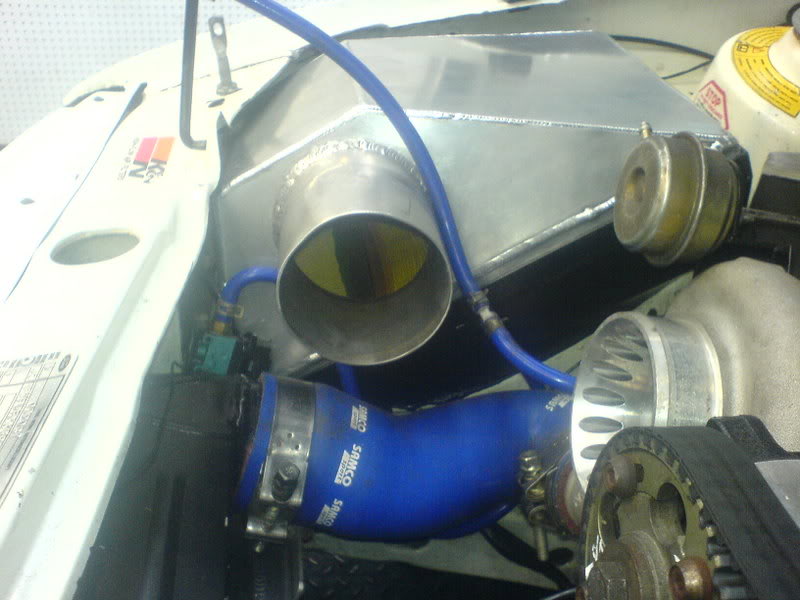
I have had a standard air box, two cone filters. an RS500 box and now my custom box.
We have tested on the rollers and power is ALWAYS better with a box.
How vaild that test is on the road is anyones guess but on thing I will say is that anyone who thinks that a unshielded cone is ok once the car is moving is wrong as both of my plastic airbox's were melted at the side closest to the turbo so that proves that the air around he is very hot indeed.
pics to follow.
We have tested on the rollers and power is ALWAYS better with a box.
How vaild that test is on the road is anyones guess but on thing I will say is that anyone who thinks that a unshielded cone is ok once the car is moving is wrong as both of my plastic airbox's were melted at the side closest to the turbo so that proves that the air around he is very hot indeed.
pics to follow.




PassionFord Post Troll
iTrader: (5)
Joined: May 2003
Posts: 3,002
Likes: 0
From: Dunstable (Junction 9 or 11 of the M1)
my mistake I thought it was off the front flat section of the inner wing.
my thoughts was because the air has to come from somewhere and yours looked like it was coming straight off the ground and turbo sucking at 30+psi = hoover.
my thoughts was because the air has to come from somewhere and yours looked like it was coming straight off the ground and turbo sucking at 30+psi = hoover.


Std airbox and K&N element for me
Has gained response over a cone imo
The only downside is you can't fit a mirror image breather catch tank and airbox is not as nice to look at as a cone
Paul
Has gained response over a cone imo
The only downside is you can't fit a mirror image breather catch tank and airbox is not as nice to look at as a cone
Paul
Thread Starter
Joined: Jul 2003
Posts: 8,293
Likes: 78
From: Aberdeen
Surely you could back calculate or analyse the diffrence between the responsiveness of the car in a workshop and on the open road???? There must be a way to work it out.

Too many posts.. I need a life!!
Joined: Sep 2006
Posts: 918
Likes: 0
The easiest way is the way I did it, to measure the inlet air temperature and then the air flow for each of the setups whilst on the open road. That way you can see which type of filter is restricting air flow and also which is suffering from heatsoak.
OK so I only did it on a lowly ST200 not a mighty Cosworth but the way of testing should be the same and will give give more useable results than on a rolling road. There are so many factors to take into account on the rr that not everyone is ever going to agree on the best solution.
OK so I only did it on a lowly ST200 not a mighty Cosworth but the way of testing should be the same and will give give more useable results than on a rolling road. There are so many factors to take into account on the rr that not everyone is ever going to agree on the best solution.

PassionFord Post Whore!!
Joined: Nov 2006
Posts: 3,538
Likes: 0
From: .

PassionFord Post Whore!!
Joined: May 2003
Posts: 5,224
Likes: 1
From: South West
i had a K&N cone on my vr6 but had rough idle problems when cold, and noticeable heatsoak after time at lowe speeds, traffic for example. Refitted original airbox and filter and both probs are no more, but there is less power at higher revs!
Guest
Posts: n/a
- box is better than cone for 1 reason : the ambient air temp in the engine compartement
- box is bad when air comes from the wheelwell : air turbulent around wheel, dirty aswell
in short : best is a scoop leading to a box, air is clean and cold and speed will eventually create a RAM effect (push air into the engine)
- box is bad when air comes from the wheelwell : air turbulent around wheel, dirty aswell
in short : best is a scoop leading to a box, air is clean and cold and speed will eventually create a RAM effect (push air into the engine)
you can find out which is better by having a laptop plugged into ECU and monitoring lambda sensor output to fuelling. If its richer it means more air is being sucked in. If its leaner it means that less air is being sucked in. So you can work out which is gaining you more power from the lambda sensor as the fuelling will be different for different air flows. Similarly cars with MAF can read air flow rating.

Banned
Joined: Oct 2007
Posts: 126
Likes: 0
From: sarrrrrf London rolling on 13's !!!!!
On a turbo engine it won't make much difference to intake temps weither a cone filter or a sealed airbox is used because the turbo compresses the air to the engine which then gets fooooooooking hot !!!!!!!!